How to Start a Beekeeping Business in Kenya
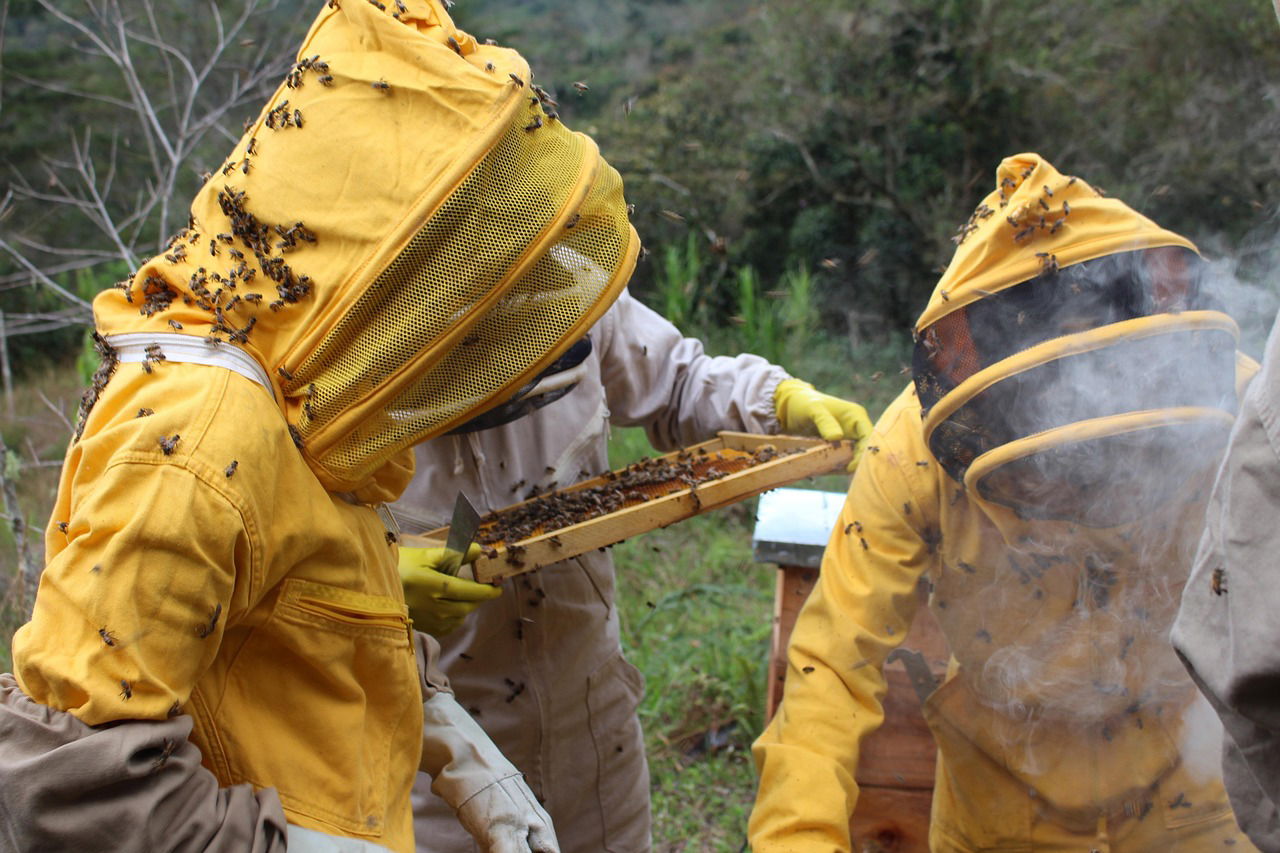
Beekeeping in Kenya: 5-Hive Starter Plan
Why it works
- Strong, year-round demand for real honey (health, medicinal, culinary).
- Low running costs after setup; bees forage freely.
- Multiple products: honey, beeswax, propolis, pollen, propolis tincture, candles, soaps, lip balm.
- Rural advantage: cleaner forage, lower theft risk if fenced, community acceptance.
What you need (minimum viable)
Hive choice (pick one path)
- Kenya Top Bar (KTBH): cheaper, simple tools, crush-and-strain harvesting. Good for low-budget start.
- Langstroth: higher yields potential, needs extractor (bigger capex) and more management.
For the lowest budget, this plan uses KTBH + crush-and-strain.
Core kit (for 5 hives – lean)
- 5 KTBH hives (DIY or fundi-made), with lids & top bars
- Stands (treated posts/metal) + grease cups/ash (ant protection)
- Bait: melted beeswax + few drops lemongrass oil
- Protective suit + veil + gloves
- Smoker & hive tool
- Buckets (food-grade), sieves/muslin, knives, uncapping fork
- 5–10 jerricans/jars for honey (reusable), labels
- Wire mesh or chain-link (simple apiary fence), signage (“Apiary—No entry”)
- Water source (shallow trough with pebbles), shade trees or shade net
Optional (later)
- Manual extractor (if you upgrade to Langstroth)
- Settling tank with honey gate
- Weighing scale (for packing), refractometer (moisture check)
Lowest viable budget (KSh)
| Item | Qty | Unit (KSh) | Subtotal |
|---|---|---|---|
| KTBH hives (fundi/DYI basic) | 5 | 3,500 | 17,500 |
| Stands + ant guards (DIY) | 5 | 600 | 3,000 |
| Bee suit + gloves + boots (entry-level) | 1 set | 6,500 | 6,500 |
| Smoker + hive tool | 1 + 1 | 1,800 | 1,800 |
| Buckets, sieves/muslin, knives | – | – | 2,000 |
| Bait (beeswax/lemongrass), rope, nails | – | – | 800 |
| Jars/jerricans + labels (starter) | – | – | 2,000 |
| Simple fence/signage & water trough | – | – | 2,000 |
| Total (lean, baiting swarms) | ~35,600 |
Ultra-lean tactics to drop under ~KSh 30k: DIY hives/stands from offcuts, borrow suit, reuse clean food-grade buckets/jars, start with 3–4 hives and add 1–2 as cash flows.
Buying nucleus colonies (nucs) (KSh ~5,000–8,000 each) speeds up production but raises initial outlay by ~25k–40k for 5 hives. The lean plan above baits free swarms.
Site selection & setup (week 1–2)
- Quiet, semi-shaded spot, 50–100 m from homesteads/paths; away from livestock bomas.
- Windbreak & morning sun (east-facing entrances).
- Stands 40–60 cm off ground; ant barriers (grease, used oil cups, ash bands).
- Clean water in a shallow trough with stones (bees won’t drown).
- Bait hives: rub interior/top bars with beeswax; add a few drops of lemongrass oil.
- Record book: hive ID, date sited, baiting, inspections, weather/flowering notes.
Operations calendar (year 1)
| Month | Task |
|---|---|
| 1–2 | Bait and site hives; check weekly for scout activity. |
| 2–4 | Colonization (natural swarms) or install nucs; minimal disturbance; control ants. |
| 4–6 | First internal inspection; confirm brood, stores, queenright; add bars as colony expands. |
| 6–9 | First light harvest (if strong nectar flow); avoid over-harvesting—leave brood & enough stores. |
| 9–12 | Regular inspections (2–4-weekly); pest checks (ants, wax moth); sanitation; prep for next flow. |
Harvest & processing (crush-and-strain for KTBH)
- Harvest only capped honey combs (white cappings; low moisture).
- Cut comb into a clean bucket → crush with clean hands or potato masher.
- Strain through muslin/sieve; let settle to drop wax particles/air.
- Optional warming (≤35–40 °C) to speed flow (avoid overheating).
- Jar in sterilized containers; label: “Pure Honey”, net weight, contacts, batch/date.
- Wax: melt, filter, and block for sale (candles/cosmetics).
Yields & conservative projections
- Natural-baited KTBH, Year 1: expect partial occupancy (not every hive fills immediately).
- Conservative Year-1 average: 8–12 kg honey/hive on occupied hives.
- Assume 4 of 5 hives occupied & harvestable → ~40 kg total in Y1.
- Year-2 onwards (better establishment): 12–20 kg/hive → 60–100 kg from 5 KTBH (good forage seasons).
- Beeswax: ~1–2 kg per 20–30 kg honey (varies by method).
Price references (typical rural/estate retail):
- Honey retail KSh 800–1,000/kg (higher with strong brand/traceability).
- Wholesale to shops KSh 600–750/kg.
- Beeswax KSh 600–1,000/kg (block), higher if processed (candles, balm).
Example cashflow (conservative, Year 1)
- Honey: 40 kg × KSh 800 = KSh 32,000
- Beeswax: 2 kg × KSh 800 = KSh 1,600
- Revenue ≈ KSh 33,600
- Operating costs (transport, jars replenishment, labels, gear maintenance): ~KSh 6,000
- Net ≈ KSh 27,600 (does not include initial capex ~35.6k)
- Payback: typically 1–2 seasons as occupancy and yields improve.
Market & products
Products: raw honey, beeswax blocks, candles, lip balm, soap, propolis tincture, pollen (advanced), comb honey (premium).
Buyers: households, agro-shops, pharmacies/health shops, mini-supers, hotels, bakers, cosmetic makers, churches (candles).
Go-to-market: estate WhatsApp, church groups, market days, farm-gate tastings, “traceable rural honey” story. Later, explore KEBS certification for supermarkets.
Quality & compliance tips
- Moisture < 20% to prevent fermentation (shake test/flow test; later buy a refractometer).
- No smoke taint—use cool smoker puffs.
- Hygiene: food-grade tools, clean jars, avoid brood comb in honey.
- Apiary safety: clear warning sign; work in suit; harvest evenings/mornings; keep first-aid/antihistamines.
- Register business at county level when you scale; consider KEBS if targeting formal retail.
Risks & controls
- Ants & honey badgers: ant barriers; sturdy stands; fence; harvest timely.
- Drought/dearth: plant bee forage (calliandra, grevillea, sunflower, sisal, mango); provide water.
- Wax moth/absconding: keep strong colonies; avoid leaving comb scraps around; minimal unnecessary disturbance.
- Theft: fence, signage, community relations, place hives slightly hidden.
10 quick wins (your edge)
- Site right (quiet, water, morning sun).
- Bait with beeswax + lemongrass.
- Logbook every visit; gentle handling.
- Control ants religiously.
- Harvest only capped comb.
- Package in 500 g / 1 kg—clear jars sell faster.
- Tell the origin story (village, floral source).
- Samples & tastings at market days.
- Use MPesa Till/Paybill for trust.
- Reinvest into more hives or better gear after first season.
Bottom line
Yes—beekeeping is profitable in rural Kenya if you start lean, manage pests, and sell as pure, local, traceable honey. With ~KSh 30–36k you can set up 5 KTBH, bait swarms, and realistically recover your investment in 1–2 seasons, then grow.