Introduction to Banana-Fibre Hair Extensions in Kenya
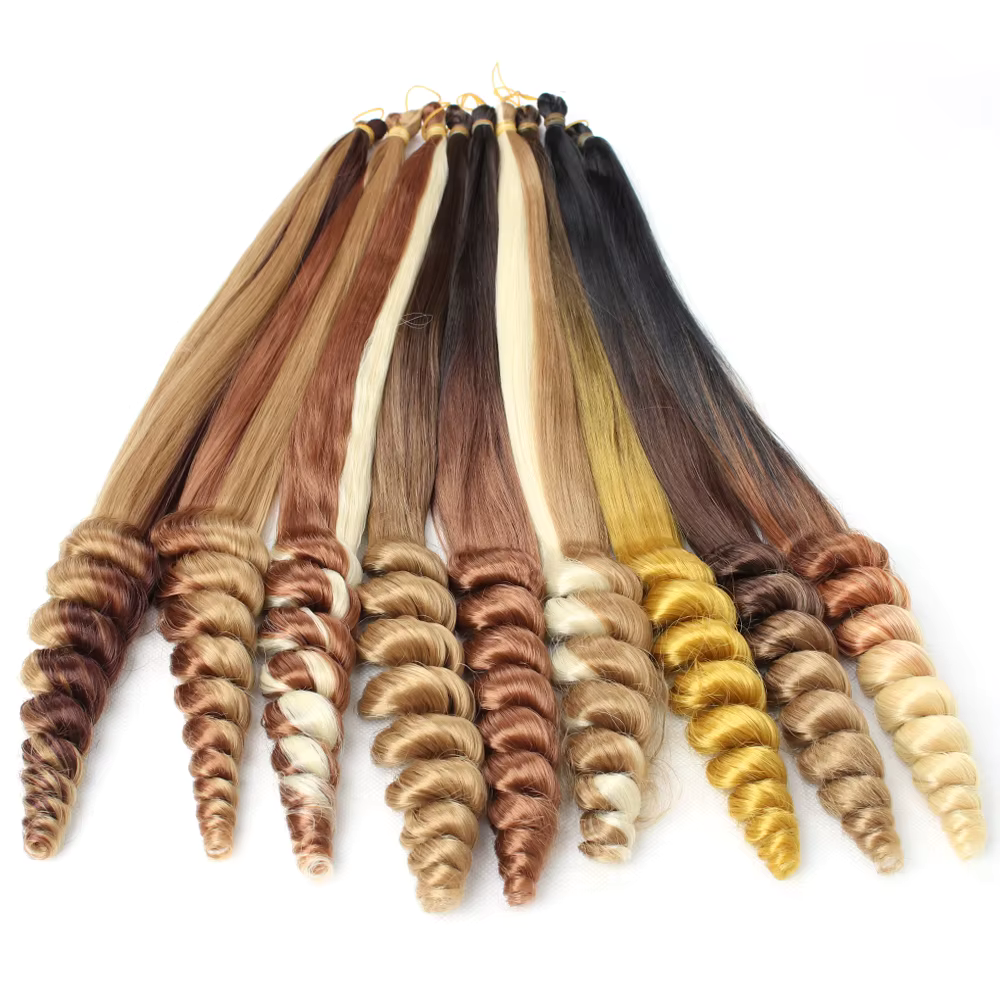
The Untapped Eco-Beauty Business Opportunity Emerging in East Africa
A New Use for Banana Waste
For decades, banana farming in Kenya has mainly been associated with food production and local trade. After harvesting bananas, farmers often discard the remaining stem as agricultural waste. In many areas, these stems are left to rot naturally, compost in farms, or are fed to livestock.
What many people do not realize is that banana stems contain strong natural fibres that can be processed into various commercial products. Across different parts of the world, banana fibre is already being used to make:
- textiles,
- ropes,
- baskets,
- carpets,
- paper,
- handbags,
- and handicrafts.
More recently, innovators have started converting banana fibre into hair additions and hair extensions for the beauty industry.
What Are Banana-Fibre Hair Extensions?
Banana-fibre hair extensions are hair products made using fibres extracted from banana stems instead of relying entirely on synthetic plastic fibres.
The process generally involves:
- extracting fibre from banana stems,
- cleaning and drying the fibre,
- softening and treating it,
- aligning and combing the strands,
- dyeing and texturing the material,
- and finally shaping it into wearable hair extensions or braiding fibre.
When properly processed, the fibre can become:
- lightweight,
- biodegradable,
- washable,
- and suitable for styling and braiding.
The idea is still relatively new, especially in Africa, but it is attracting increasing attention because of its environmental and commercial potential.
Why the Idea Is Gaining Attention
Globally, consumers are becoming more interested in environmentally friendly products. Industries that heavily depend on plastics are facing pressure to explore sustainable alternatives.
The beauty industry is part of this shift.
Many conventional synthetic braids and extensions are made from plastic-based fibres. While affordable and widely available, they are not biodegradable and can sometimes cause scalp irritation or discomfort for some users.
Banana-fibre hair extensions offer an alternative that is:
- plant-based,
- biodegradable,
- locally sourced,
- and potentially more environmentally sustainable.
This growing interest in eco-friendly beauty products is creating opportunities for innovators and small manufacturers.
East Africa’s Early Pioneers
East Africa has already started experimenting with banana-fibre hair technology.
In Uganda, companies such as Cheveux Organique and Nature2Hair have gained international attention for developing hair extensions made from banana fibre.
Their work has shown that banana stems can become valuable raw materials for beauty products instead of remaining agricultural waste.
These innovators have also helped demonstrate that Africa can develop sustainable beauty products using locally available resources.
Why Kenya Is Well Positioned
Kenya is naturally suited for this type of venture because the country already has:
- widespread banana farming,
- a large beauty and salon industry,
- skilled artisans,
- and growing interest in value addition businesses.
Counties such as:
- Murang’a,
- Meru,
- Embu,
- Kisii,
- Nyamira,
- Kirinyaga,
- Kakamega,
- and Taita Taveta
produce significant amounts of banana stems every year.
This means the raw material is both abundant and affordable.
At the same time, Kenya imports large volumes of synthetic hair products annually. A locally developed natural-fibre alternative could eventually create opportunities for:
- SMEs,
- women groups,
- youth enterprises,
- salons,
- and eco-conscious beauty brands.
Can It Become a Cottage Industry?
One of the most exciting aspects of banana-fibre hair production is that it can begin on a very small scale.
Unlike large manufacturing industries that require expensive factories, early-stage banana fibre processing can be done:
- at home,
- in small workshops,
- through women groups,
- or as village-based cottage industries.
Basic manual fibre extraction can start using simple tools and locally available materials.
This makes the business potentially accessible to:
- rural entrepreneurs,
- youth groups,
- self-help groups,
- and small-scale innovators looking for low-cost manufacturing ideas.
The Biggest Challenge: Fibre Softening
Although the opportunity is promising, the business is not without challenges.
Raw banana fibre is naturally:
- rough,
- stiff,
- and coarse.
Turning it into soft, comfortable, wearable hair extensions requires:
- treatment,
- softening,
- experimentation,
- and proper processing techniques.
This is currently one of the most important innovation areas within the industry.
Entrepreneurs entering this space must be prepared for:
- testing,
- product improvement,
- salon feedback,
- and continuous learning.
More Than Just a Beauty Product
Banana-fibre hair extensions represent more than simply another salon product.
The idea touches on several important economic opportunities including:
- agricultural value addition,
- waste-to-wealth innovation,
- sustainable manufacturing,
- rural industrialization,
- and green entrepreneurship.
Instead of throwing away banana stems, farmers and entrepreneurs can potentially turn agricultural waste into products with commercial value.