Step-by-Step SOP for Banana Chips Production in Kenya
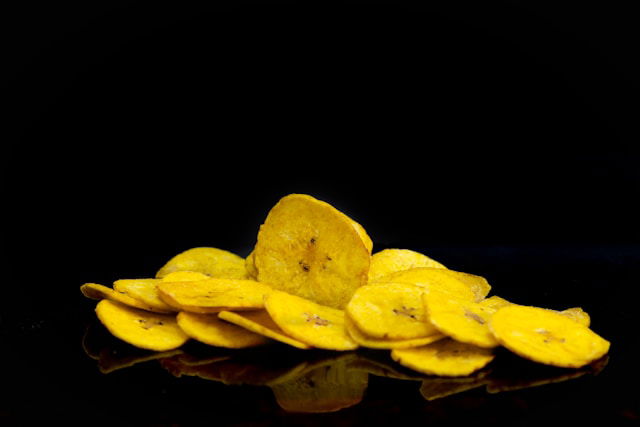
Banana chips are one of the simplest and most profitable cottage food-processing businesses in Kenya. This Standard Operating Procedure (SOP) outlines the exact steps used by small processors and cottage industries to produce high-quality banana chips for sale.
1. Raw Material Selection
Choose the right bananas for chips.
Best varieties in Kenya:
- Cavendish
- Uganda green bananas (Matoke)
- Plantains
Requirements
- Slightly mature but not overripe
- Firm texture
- No bruises or rot
Example quantity
- 1 sack bananas = 80–100 kg
2. Washing and Cleaning
Purpose: Remove dirt, latex, and microorganisms.
Procedure
- Wash bananas thoroughly in clean water.
- Add a small amount of food-grade sanitizer or salt to the water.
- Rinse again with clean water.
Equipment
- Plastic basin
- Clean water
- Food-grade sanitizer (optional)
3. Peeling
Procedure
- Use a knife to peel the bananas.
- Remove all peel completely.
- Place peeled bananas in clean water to prevent discoloration.
Tip
Add salt or lemon juice to the water to prevent browning.
4. Slicing
Goal: Produce thin, uniform slices.
Procedure
- Slice bananas into 1–2 mm thickness.
- Use a banana slicer or mandoline cutter for uniform chips.
Equipment
- Manual slicer (KSh 1,500–3,000)
- Knife (for small production)
Uniform slices ensure:
- Even frying
- Better texture
5. Pre-Treatment (Optional but Recommended)
This step improves color and crispiness.
Prepare a solution:
- 1 liter water
- 1 teaspoon salt
- 1 teaspoon lemon juice
Procedure
- Dip banana slices for 2–3 minutes.
- Remove and drain.
6. Frying
Procedure
- Heat cooking oil to 170–180°C.
- Add sliced bananas in small batches.
- Fry for 3–5 minutes until golden.
- Stir occasionally to prevent sticking.
Equipment
- Deep frying pan or fryer
- Cooking stove or gas burner
- Frying spoon
Tip
Do not overcrowd the fryer.
7. Oil Draining
Remove excess oil.
Procedure
- Place chips on oil-absorbent paper.
- Allow chips to cool.
This improves:
- Crispiness
- Shelf life
8. Flavoring (Optional)
Add flavor while chips are still warm.
Common flavors in Kenya:
- Salt
- Sugar
- Chili
- Cinnamon
- Honey glaze
Procedure
- Sprinkle seasoning evenly.
- Mix gently.
9. Cooling
Before packaging:
- Allow chips to cool completely (15–20 minutes).
If packaged hot:
- Moisture forms
- Chips become soggy
10. Packaging
Proper packaging maintains crispness and shelf life.
Packaging options
- 50 g snack packs
- 100 g packs
- 250 g packs
Materials
- Food-grade plastic pouches
- Heat sealer
Shelf life
- 2–3 months if sealed properly.
11. Labeling
A basic label should include:
- Product name
- Ingredients
- Net weight
- Production date
- Expiry date
- Contact details
If supplying supermarkets, certification may be required from the Kenya Bureau of Standards.
12. Storage
Store finished chips in:
- Cool dry place
- Airtight containers
- Away from sunlight
Recommended storage temperature:
- 20–25°C
Example Small-Scale Production Output
From 10 kg bananas
- Banana chips produced: 4–5 kg
If packed in 50 g packets:
- 5 kg → 100 packets
Selling price per packet:
- KSh 20–30
Revenue potential:
- KSh 2,000 – 3,000
Basic Equipment Needed
| Equipment | Estimated Cost |
|---|---|
| Banana slicer | KSh 2,000 |
| Deep frying pan | KSh 3,000 |
| Gas stove | KSh 4,000 |
| Heat sealer | KSh 2,500 |
| Weighing scale | KSh 1,500 |
Startup cost: about KSh 12,000 – 15,000
Key Quality Tips
✔ Maintain clean working surfaces
✔ Use fresh cooking oil
✔ Maintain consistent slice thickness
✔ Avoid moisture during packaging
✔ Keep chips fully cooled before sealing
✅ Business insight:
Banana chips are one of the fastest-selling snack products in Kenyan kiosks, schools, and supermarkets, making them ideal for a home-based micro-processing venture.