The Integrated 2-Acre Retirement Homestead: Zero Waste, Vertical Living & Cash Flow in Rural Kenya
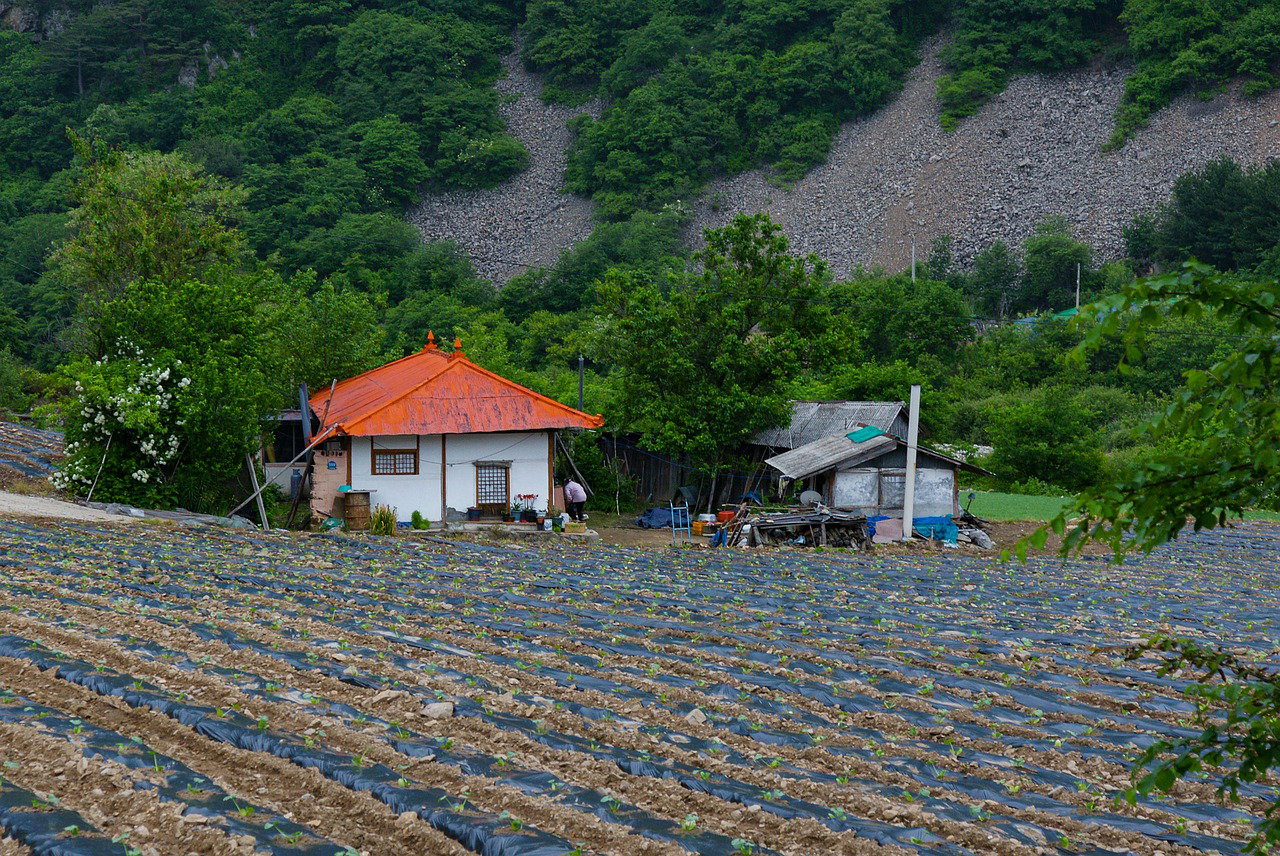
Integrated 2-Acre Retirement Homestead in Kenya: Architectural Blueprint & Setup
Retirement in Kenya is undergoing a paradigm shift. For decades, the traditional dream meant building a sprawling rural home on family land, a passive structure that drains monthly pension payouts and savings on maintenance, electricity bills, and basic groceries.
What if your retirement home could pay for its own upkeep, run completely off-grid, and generate daily cash flow without demanding backbreaking manual labor
Welcome to the Integrated 2-Acre Homestead Model. By applying vertical spatial planning, zero-waste energy systems, and high-value agricultural zoning, a modest quarter-acre compound can support your living space, farm storage, and livestock while leaving 1.75 acres completely open for commercial farming.
The Core Concept: Vertical Integration & Spatial Efficiency
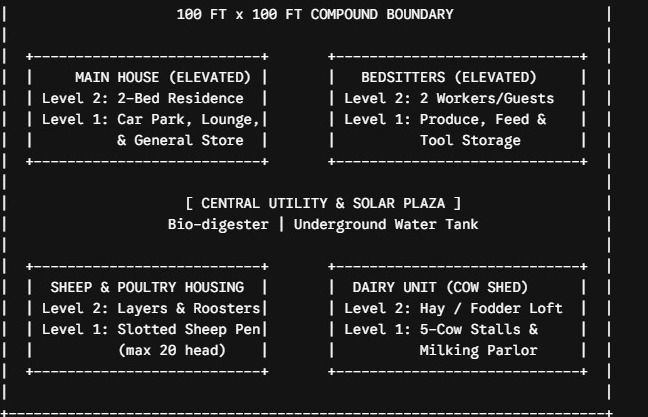
Traditional farm setups spread houses, stores, sheep pens, and cow sheds across the plot, wasting valuable arable land. In this blueprint, we build upward rather than outward, utilizing raised foundations (pillars and stilt framing) to maximize every single square foot of a 100ft by 100ft (0.25 -acre) homestead compound.
1. The Elevated Main Residence
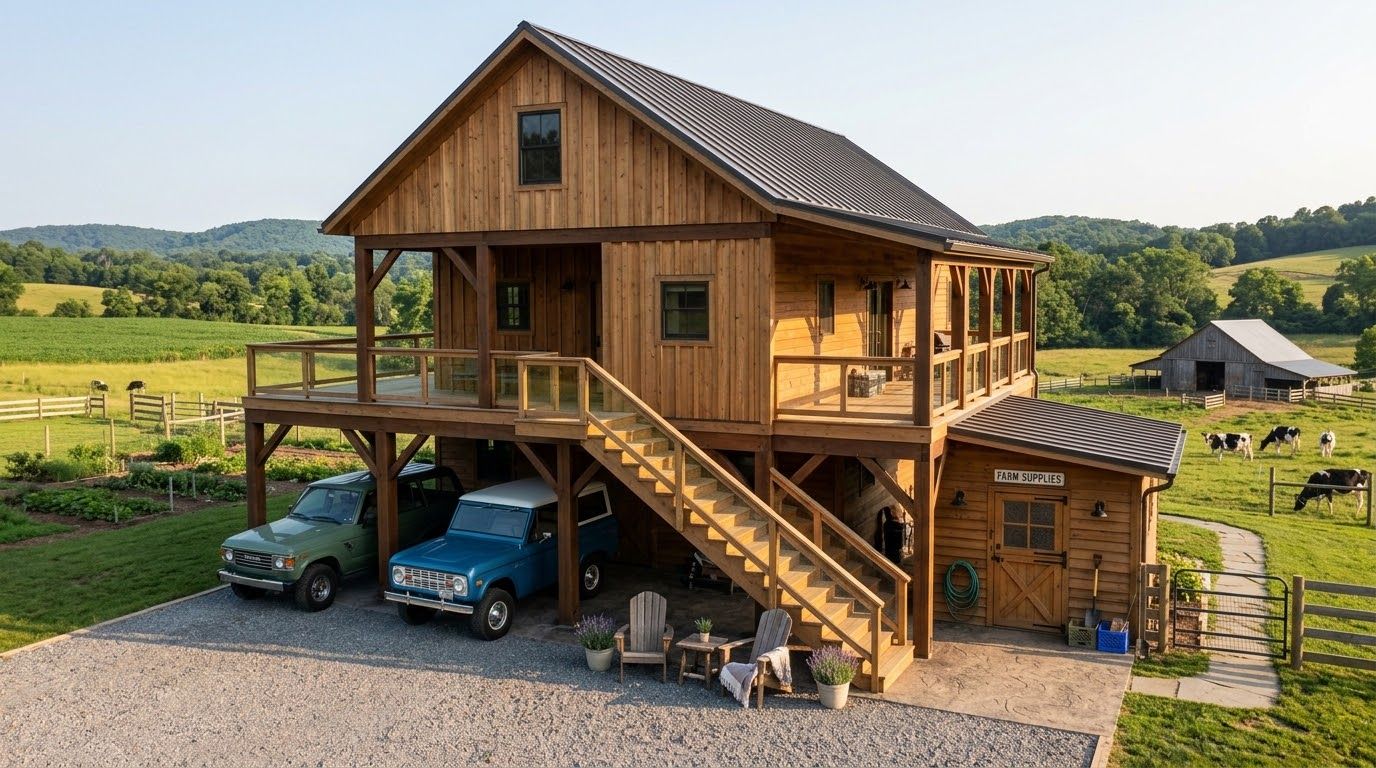
- Level 2 (Living Quarters): A modest, well-lit 2-bedroom home featuring an open-plan kitchen, master ensuite, and a wide veranda.
- Level 1 (Ground Space): The ground floor is left open under concrete or reinforced pillars, providing a shaded double car park, an outdoor lounging area sheltered from rain and sun, and a secure lock-up general store for household supplies.
- Building Materials: Precast concrete wall panels or light-gauge steel framing combined with stone-coated iron sheets reduce structural weight, lower construction costs by 20–30% compared to traditional masonry, and accelerate build time.
2. The Staff & Visitor Compound
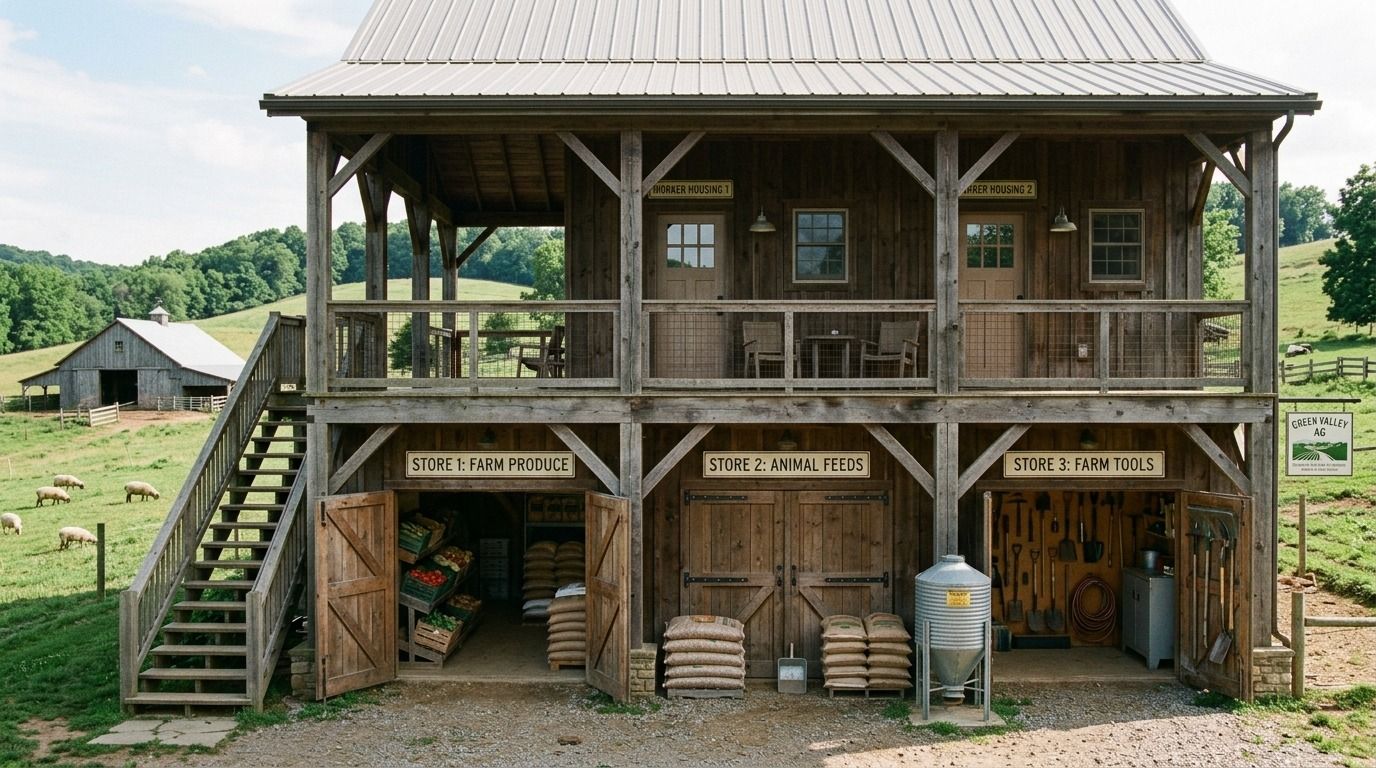
- Level 2 (Living Quarters): Two self-contained bedsitters for permanent farm workers or visiting family.
- Level 1 (Ground Space): Enclosed storage space designated for harvested farm produce, daily tools, emergency machinery, and livestock feed bags, keeping rats and dampness away from the main house.
3. Dual-Layer Livestock Units
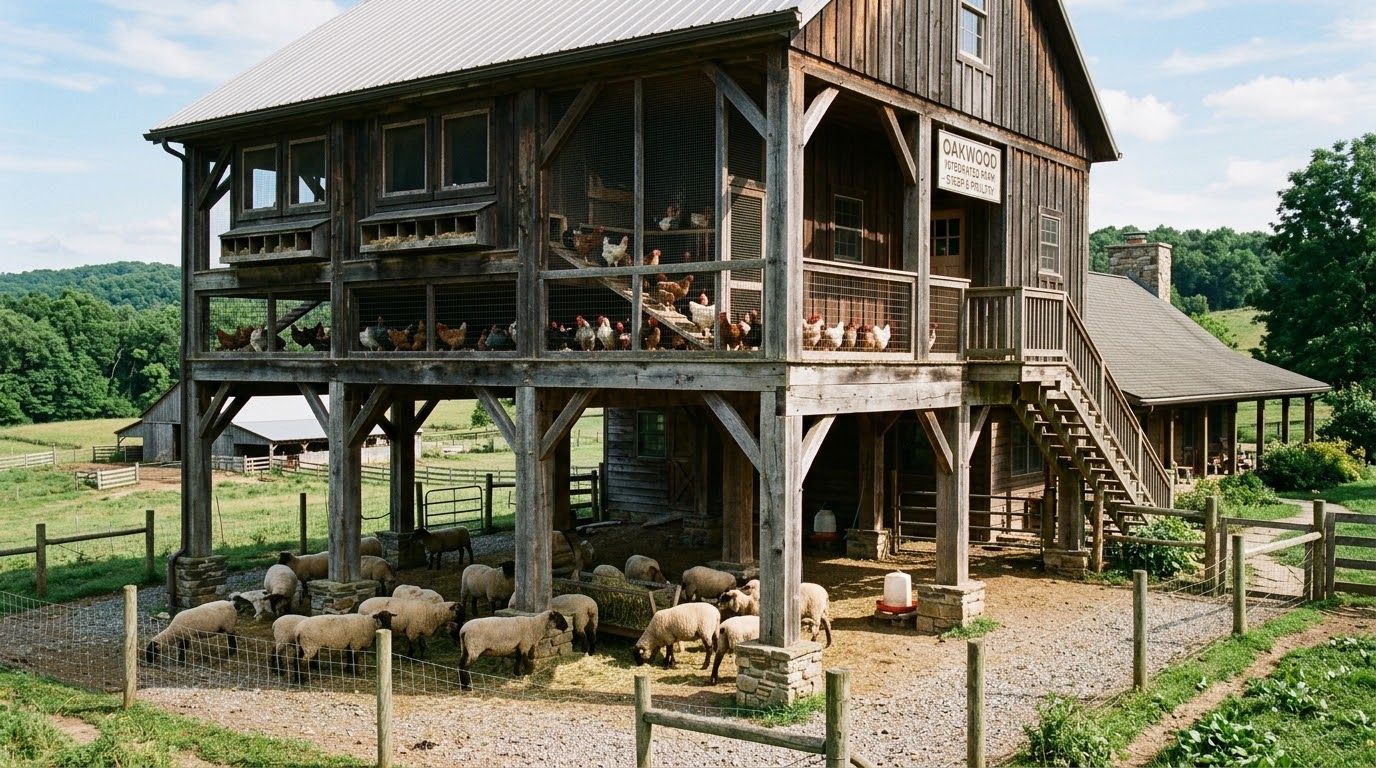
- Sheep & Poultry Structure: A raised timber and mesh unit. The ground level features a slotted wooden floor for up to 20 sheep (allowing droppings to fall through for easy collection). The upper layer houses poultry (100 egg layers and improved Kienyeji roosters for meat).
- The Dairy Unit & Fodder Loft: A 5-cow zero-grazing unit on ground level with sloped concrete flooring leading directly to a manure collection trough. The upper deck functions as a dry fodder and hay loft, protecting feed from ground moisture and utilizing gravity to feed livestock below.
The Circular Homestead Economy: Waste-to-Energy Loop
The magic of an integrated micro-farm lies in its closed-loop cycle. Inputs from one section directly fuel another, eliminating monthly utility bills and chemical fertilizer expenses.
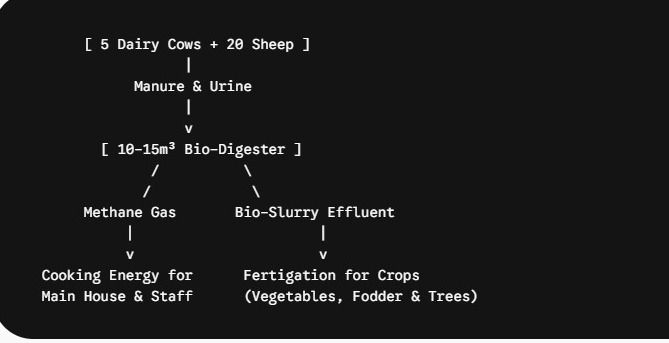
- Biogas Cooking Power: Manure from the 5 cows and 20 sheep is channeled into a 10 –15 m3 underground bio-digester. This produces continuous methane gas piped directly to the main house and bedsitters, eliminating cooking gas (LPG) and charcoal costs entirely.
- Bio-Slurry Fertigation: The byproduct of anaerobic digestion, bio-slurry, is a nitrogen-rich liquid fertilizer. Pumped through drip lines or gravity channels, it feeds short-term vegetables, fruit trees, and Napier grass without chemical degradation of the soil.
- Rainwater Harvesting Canopy: Combining elevated roofs across the main residence, bedsitters, and livestock sheds creates over 400 m2 of catchment area. In regions with moderate rainfall (800mm/year), this setup captures up to 320,000 liters of clean rainwater annually, stored in a central underground tank to minimize solar pump usage.
Zoning the Remaining 1.75 Acres for High-Yield Cash Flow
With the homestead footprint tightly contained within 100ft by 100ft, the remaining 1.75 acres are divided strategically into three production zones designed to balance daily cash flow with long-term crop equity:
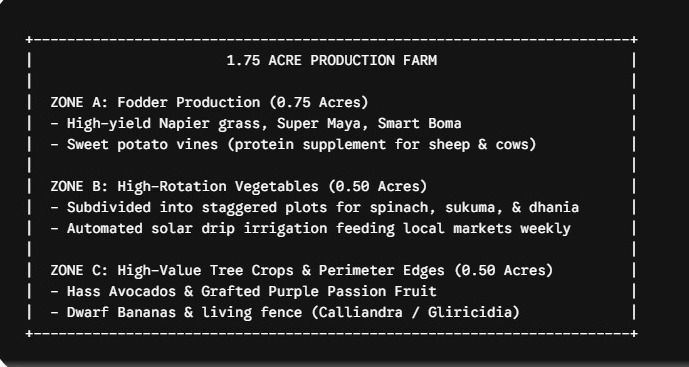
- Zone A: Fodder Base (0.75 Acres): Planted with high-yielding Napier grass varieties (e.g., Super Maya) intercropped with sweet potato vines and Lucerne. This forms the primary roughage feed for the dairy cows and sheep.
- Zone B: Quick-Rotation Market Crops (0.50 Acres): Subdivided into plots for spinach, sukuma wiki, coriander (dhania), and capsicum. Because rural and peri-urban market demand for fresh greens is consistent, this section generates weekly household cash flow.
- Zone C: High-Value Perennials & Boundary Planting (0.50 Acres):Placed along boundaries and warmer slopes.
- Hass Avocados: 30–40 trees planted along perimeter lines yield long-term seasonal income for export or local aggregation.
- Purple Passion Fruit & Bananas: Trellised along inner fences to maximize vertical space, yielding fruit within 9–12 months.
- Living Fence: Border lines lined with nitrogen-fixing Calliandra or Gliricidia, providing natural security while supplying high-protein forage.
Off-Grid Power & Water Independence
A true retirement venture must be immune to power outages and monthly utility tariffs.
1. Solar Micro-Grid
- Capacity: A 5kW hybrid solar inverter system coupled with a 10kWh Lithium (LiFePO4) battery bank and rooftop solar panels.
- Load Coverage: Powers all LED lighting across the main house, bedsitters, and security perimeter; powers refrigeration, farm electronics, and a submersible solar water pump.
2. Water Security
- Borehole & Solar Pump: In areas without a reliable permanent river, a budget solar-powered borehole (100–120 meters) delivers 2,000–5,000 liters per hour during peak sunlight hours.
- Gravity-Fed Storage: Water is pumped into a elevated 10,000-liter plastic storage tank mounted above the livestock loft, allowing gravity-fed distribution to irrigation lines and domestic taps without requiring additional pressure pumps.
What’s Next in This Series?
In Part 2, we examine the exact agricultural feeding ratios, crop rotation schedules, livestock breed selection, and local market channels required to run this 2-acre farm with minimal manual stress.