4 Hydroponic Systems for Kenya: NFT, DWC, Drip & Vertical Towers
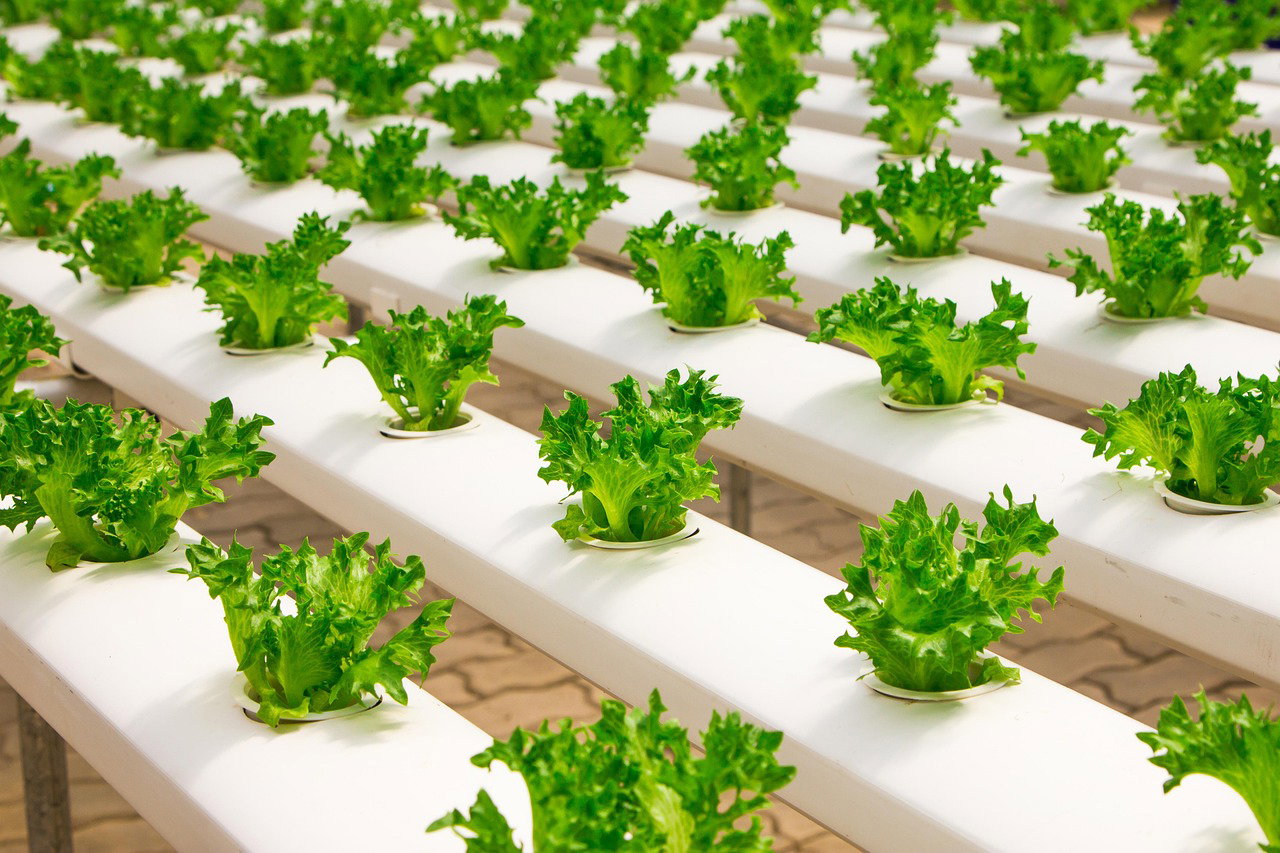
4 Hydroponic Systems for Kenya: NFT, DWC, Drip & Vertical Towers
Choosing the right hydroponic system is the single most important decision you will make when transitioning to soil-free farming. While the core principle, delivering water-dissolved nutrients directly to roots, remains identical across setups, the mechanism by which water and oxygen reach the plant determines what crops you can grow, your energy requirements, and your initial capital investment.
In Kenya’s climate and market environment, system selection depends heavily on local realities: electricity reliability, ambient temperature, water hardness, and access to local substrates like volcanic pumice and coconut coir.
Below is an in-depth breakdown of the 4 primary hydroponic systems used by modern Kenyan growers, complete with technical operations, ideal crop matching, pros, cons, and spatial requirements.
1. Nutrient Film Technique (NFT)
The Nutrient Film Technique (NFT) is the gold standard for commercial leafy green production globally and across peri-urban Kenyan farms in areas like Ruiru, Machakos, and Eldoret.
How It Works
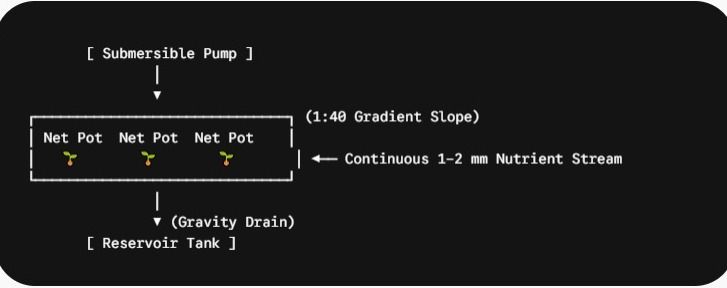
In an NFT setup, plants sit in small net pots supported inside PVC channels or specialized food-grade gullies. The channels are set at a continuous gentle slope (a gradient of 1:40, or a 2.5 cm drop for every 1 meter of length).A submersible water pump delivers a steady, low-volume stream of nutrient solution to the top end of each channel.
As gravity pulls the liquid down the slope, it forms a thin film of water (1–2 mm deep) across the bottom of the channel. The tips of the plant roots hang directly into this nutrient film, while the upper portions of the root mass remain suspended in moist air, absorbing maximum oxygen. The excess solution drains back into the main reservoir to be recirculated continuously.
Best Crops
- Lettuce (Butterhead, Romaine, Lollo Rossa)
- Herbs (Basil, Dania/Coriander, Mint, Parsley)
- Spinach & Bok Choy
System Analysis for Kenyan Farmers
| Strengths | Challenges |
| • Maximum Space Efficiency: High plant density per square meter. | • Power Dependence: If Kenya Power outages last over 45 minutes, dry roots suffer fast. |
| • Low Solution Volume: Uses less total water/nutrients than deep tanks. | • Root Temp Sensitivity: PVC channels heat up rapidly under direct sun. |
| • Clean Harvests: Leaves never touch media or splash water. | • Unsuited for Heavy Crops: Cannot support heavy root networks (e.g., adult tomatoes). |
2. Deep Water Culture (DWC)
Also known as the Floating Raft System, Deep Water Culture is the simplest, most resilient passive-style system available. It is widely adopted by beginner growers and urban backyard farmers across Nairobi and Kisumu.
How It Works
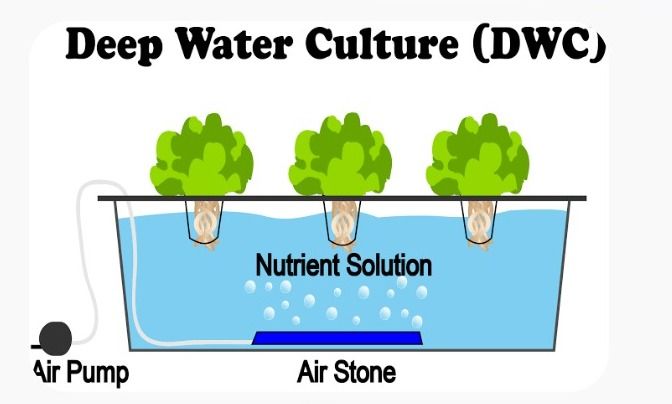
Instead of flowing water through narrow pipes, DWC uses a deeper trough or pool filled with 20 cm to 30 cm of standing nutrient solution.
High-density styrofoam sheets (rafts) are drilled with holes to hold net pots and floated directly on top of the water. Plant roots dangle fully submerged in the nutrient bath 24/7.
To keep the roots from drowning, an electric or solar-powered air pump feeds air stones placed at the bottom of the trough, continuously bubbling dissolved oxygen into the liquid.
Best Crops
- Spinach & Sukuma Wiki (yields large, thick leaves)
- Kales & Swiss Chard
- Local Culinary Herbs
- Heavy Leaf Lettuce
System Analysis for Kenyan Farmers
| Strengths | Challenges |
| • Thermal Stability: Large water mass resists rapid temperature spikes. | • Weight Considerations: Deep water pools are heavy (not for weak balconies). |
| • Power Interruption Protection: Roots stay hydrated for days if power drops. | • Root Rot Risk: Poor oxygenation triggers Pythium fungus quickly. |
| • Ultra-Low Cost Setup: Can be built using timber frames lined with dam liner. | • High Initial Water Fill: Requires substantial initial volume of clean water. |
3. Substrate Drip System (Aggregated Bucket / Dutch Bucket)
For heavy-fruiting crops with aggressive root systems, liquid-only systems (like NFT or DWC) fall short. The Substrate Drip System is designed specifically to handle large, multi-month fruiting plants.
How It Works
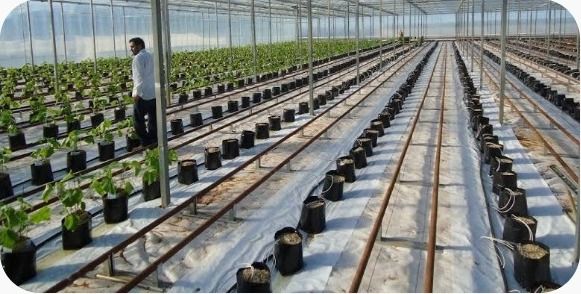
Plants are grown inside individual Dutch buckets, grow-bags, or substrate troughs filled with an inert medium, most commonly volcanic pumice (sourced near Naivasha/Rift Valley) or processed coco coir (sourced from the Coast).
A drip line fitted with pressure-compensating emitters is anchored at the base of each plant. Small timed squirts of nutrient solution are delivered directly to the root zone multiple times per day.
The inert growing media holds moisture and nutrients around the roots while maintaining airy space for oxygen exchange. Drain lines collect runoff liquid at the bottom of each bucket to either drain away (drain-to-waste) or return to the main tank (recirculating).
Best Crops
- Tomatoes (Determinate & Indeterminate commercial varieties)
- Capsicum / Sweet Peppers (Red, Yellow, Green)
- Strawberries
- Cucumbers & Zucchini
System Analysis for Kenyan Farmers
| Strengths | Challenges |
| • Handles Heavy Yields: Excellent root support for tall, fruit-bearing crops. | • Substrate Maintenance: Substrate media requires washing and sterilizing between crop cycles. |
| • Uses Local Materials: Pumice and cocopeat are readily available across Kenya. | • Drip Clogging: High-mineral hard borehole water can clog drip emitters. |
| • Drought/Power Buffer: Substrate retains water for up to 24 hours without pumping. | • Higher Media Costs: Buying initial bulk pumice/cocopeat increases startup budget. |
4. Vertical A-Frame & Tower Systems
When space is your tightest constraint, such as urban rooftops, small backyards, or small commercial plots, vertical systems allow you to scale upward instead of outward.
How It Works
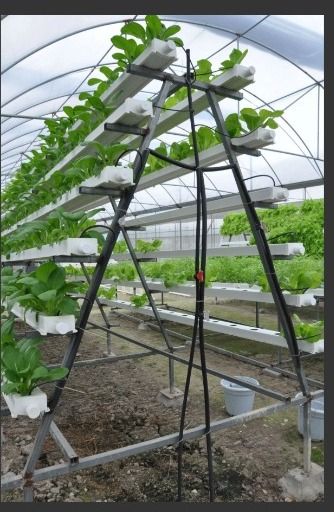
Vertical hydroponics takes two primary forms:
- A-Frame Systems: NFT channels are mounted on an angled wooden or steel "A" frame ladder structure. Water is pumped to the top pipes on both sides of the "A" and cascades down through lower rows via connecting tube elbows before draining back to the reservoir.
- Vertical Towers: Food-grade PVC pipes or stackable modular pots stand completely vertical. Water is pumped up a central inner hose to the top of the column and rains down through the inside of the tube, misting plant roots suspended along the tower body.
Best Crops
- Strawberries (ideal vertical orientation)
- Compact Lettuce & Herbs
- Celery & Spring Onions
System Analysis for Kenyan Farmers
| Strengths | Challenges |
| • 3x to 5x Plant Density: Up to 100 plants per 2 square meters. | • Shading Issues: Upper rows can shade out lower rows if improperly aligned. |
| • Ergonomic Harvesting: Standing-level maintenance with no bending over. | • Uneven Water Distribution: Lower plants can receive excess water if slope flow isn't balanced. |
| • High Visual Appeal: Ideal for urban agritourism or estate displays. | • Structural Weight: Tall vertical structures require strong wind bracing. |
Technical Comparison Matrix
Use this quick summary table to match your space, budget, and power situation to the ideal setup:
| Feature / Metric | NFT (Nutrient Film) | DWC (Floating Raft) | Substrate Drip | Vertical Towers / A-Frame |
| Best Target Crops | Leafy Greens, Herbs | Kales, Spinach, Greens | Tomatoes, Peppers, Berries | Strawberries, Lettuce, Herbs |
| Water Flow | Continuous thin film | Standing deep bath | Intermittent drip emitters | Cascading drop / Rain mist |
| Power Risk Tolerance | Low (Roots dry quickly) | High (Stays wet days) | Medium (Media holds water) | Low (Fast drying in columns) |
| Ideal Medium | None (Bare roots in net pot) | None / Rockwool plugs | Volcanic Pumice / Cocopeat | None or Net Pot plugs |
| Relative DIY Cost | Moderate | Low | Moderate to High | Moderate to High |
Key Decision Drivers for System Selection
- Assess Your Power Reliability: If you reside in an area with frequent, unannounced power cuts and do not plan to install a small solar/battery backup pump, DWC or Substrate Drip systems provide the safest safety net.
- Match the System to Market Demand: If your primary buyers are high-end restaurants seeking fresh butterhead lettuce, build NFT or A-Frames. If you are growing plum tomatoes or capsicums for wholesale markets, build a Substrate Drip system.
- Know Your Water Source: If relying on deep borehole water high in dissolved carbonates, filter the water or use Substrate Drip with anti-clogging drip line emitters to avoid frequent maintenance.