Batian vs Ruiru 11 Coffee: Which Variety Is Better for Farmers in Kenya?
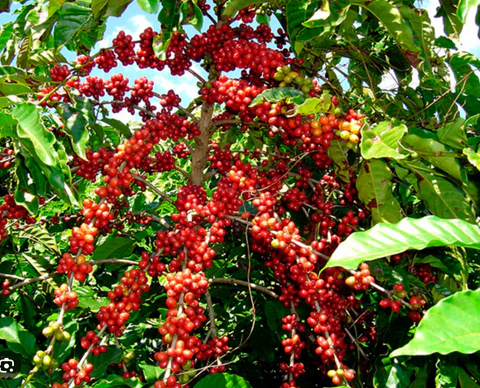
Kenya has developed several improved coffee varieties to help farmers fight diseases, increase yields, and maintain the country’s reputation for high-quality Arabica coffee. Among the most important modern varieties are Ruiru 11 and Batian.
Both varieties were developed by Kenyan coffee researchers to overcome problems faced by older varieties such as SL28 and SL34, which produce excellent coffee but are highly susceptible to pests and diseases. For farmers starting or rehabilitating coffee farms, the big question often becomes: Which variety is better, Batian or Ruiru 11?
This guide compares the two varieties based on yield, disease resistance, growth habit, management needs, and profitability.
Overview of the Two Varieties
Ruiru 11
- Released in 1985 by Kenyan coffee researchers.
- A compact hybrid variety developed by crossing Catimor with Kenyan SL varieties and others.
- Designed to resist Coffee Berry Disease (CBD) and Coffee Leaf Rust (CLR) while maintaining good yields.
Key traits:
- Compact dwarf tree
- High yield potential
- Early maturity (about 2 years)
- Suitable for high-density planting
Batian
- Released in 2010 by the Coffee Research Institute.
- Developed from several parent varieties including SL28, SL34, Rume Sudan, and Ruiru 11.
- Designed to combine disease resistance with better cup quality.
Key traits:
- Taller tree than Ruiru 11
- Strong disease resistance
- Improved flavor quality
- Can be propagated from seed
Batian vs Ruiru 11: Key Differences
| Feature | Ruiru 11 | Batian |
|---|---|---|
| Year released | 1985 | 2010 |
| Tree size | Compact/dwarf | Taller |
| Yield potential | Very high | High |
| Plant density | Very high (many trees per acre) | Moderate |
| Disease resistance | Strong against CBD & rust | Strong against CBD & rust |
| Time to first harvest | ~2 years | ~2 years |
| Cup quality | Good but sometimes inconsistent | Generally better quality |
| Propagation | F1 hybrid (seed must be purchased) | Can be grown from seed |
Sources:
Yield Comparison
Ruiru 11
One of the biggest advantages of Ruiru 11 is high yield per acre.
Because the trees are compact, farmers can plant more trees per hectare, increasing production. Some farms can grow up to about 3,000 trees per hectare, much higher than traditional varieties. This makes Ruiru 11 attractive for farmers with small land sizes.
Batian
Batian also produces high yields, but its trees are larger and require wider spacing.
This means:
- Fewer trees per acre
- Slightly lower yield per unit area compared to Ruiru 11
However, Batian can still produce strong harvests under good management.
Disease Resistance
Both varieties were developed primarily to fight coffee diseases.
Diseases They Resist
- Coffee Berry Disease (CBD)
- Coffee Leaf Rust (CLR)
These diseases previously caused major losses in Kenya’s coffee industry. Both varieties offer much better resistance than SL28 and SL34.However:
- Ruiru 11 has historically shown strong resistance to rust.
- Batian also has good resistance but may show intermediate tolerance in some conditions.
Coffee Quality (Cup Quality)
This is where Batian often wins.
Ruiru 11
Cup quality can be inconsistent depending on growing conditions and processing. Some coffee professionals feel it lacks the intense flavors of traditional SL varieties.
Batian
Batian was specifically developed to improve flavor quality while maintaining disease resistance.
When grown at high altitude and well managed, it can produce complex coffees with citrus, fruit, and floral notes.
Root System and Drought Tolerance
Ruiru 11
One disadvantage is that the variety often has shallow roots, which can make it sensitive to drought stress. To solve this, farmers sometimes graft Ruiru 11 onto deep-rooted varieties like SL28.
Batian
Batian tends to have stronger roots and better environmental adaptability.
This makes it slightly more resilient under variable conditions.
Ease of Propagation
Ruiru 11
Ruiru 11 is an F1 hybrid.
This means:
- Seeds must come from certified breeding programs
- Farmers cannot reliably reproduce the variety from saved seed
Batian
Batian is open-pollinated.
Farmers can:
- Produce seedlings from seeds
- Establish their own nurseries more easily
Profitability for Farmers
Profit depends on several factors.
Ruiru 11 Advantages
- High yield per acre
- Suitable for small farms
- Early production
- Lower disease losses
Batian Advantages
- Better coffee quality
- Strong export market potential
- Easier propagation
- Strong adaptability
Which Variety Is Better?
The answer depends on the farmer’s situation.
Choose Ruiru 11 if:
- You have small land size
- You want maximum yield per acre
- You want high-density planting
Choose Batian if:
- You want better coffee quality
- You want a variety you can propagate from seed
- You farm in areas suitable for larger trees
Best Strategy for Many Farmers
Many coffee farmers today plant both varieties together.
Benefits include:
- Spreading risk
- Improving genetic diversity
- Balancing yield and quality
Some farms also combine them with SL28 and SL34 to maintain Kenya’s famous cup profile.
Final Thoughts
Both Ruiru 11 and Batian are important modern coffee varieties that help Kenyan farmers overcome disease challenges while maintaining production.
- Ruiru 11 is ideal for farmers seeking high yield and compact trees.
- Batian offers better cup quality and easier propagation.
For most farmers, the best approach is a mixed coffee farm combining several varieties, ensuring resilience, productivity, and strong market demand.