Is Hydroponic Food Healthy? How to Market & Sell Hydroponic Produce in Kenya
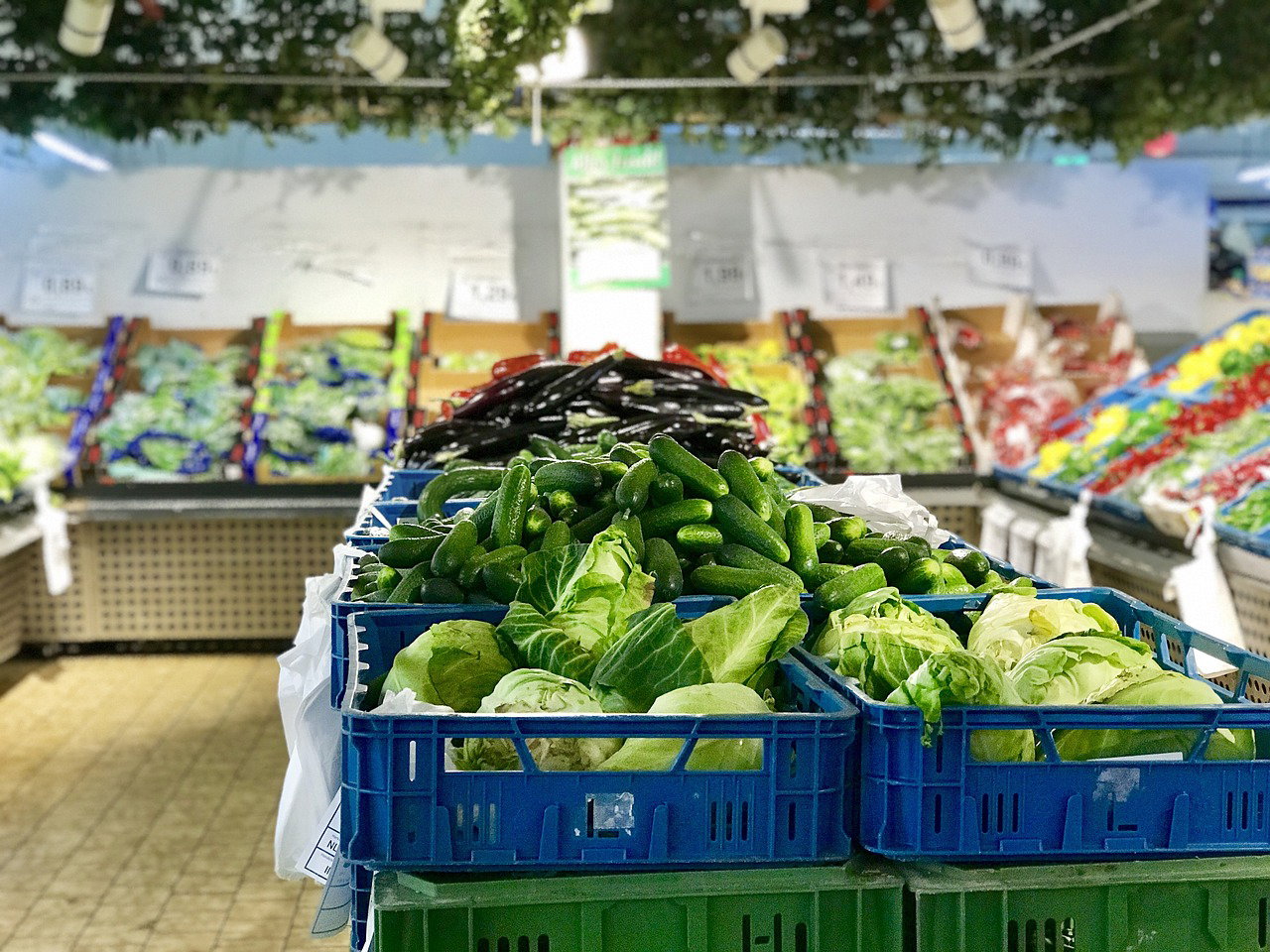
Is Hydroponic Food Healthy? How to Market & Sell Hydroponic Produce in Kenya
As hydroponic farming expands across Kenya, prospective growers face two major questions:
Are soil-free crops actually healthy to consume? and Who will buy them at a profitable price point?
Consumer education around food safety is rapidly changing in Kenya's urban areas. With growing public awareness of soil contamination, chemical pesticide residues, and heavy metals in traditional open-field crops, soil-free produce offers a strong value proposition: clean, pesticide-free, consistent quality year-round.
This guide covers the nutritional facts of hydroponic produce, addresses common food safety myths, and outlines concrete market channels to turn your harvest into a thriving business in Kenya.
1. The Science: Is Hydroponic Food Healthy?
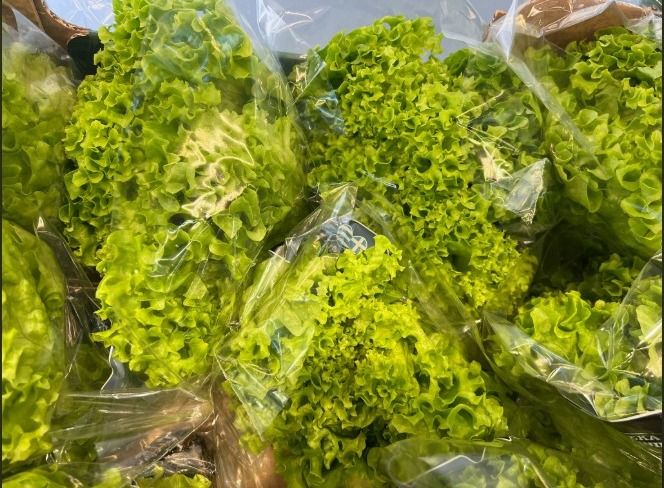
A common myth among consumers is that soil-grown food is naturally more nutritious because it comes from dirt, while hydroponic food is "artificial." Plant physiology tells a different story. Clean, soil-free leafy greens ready for retail display.
How Plants Nutrient Absorption Works
Plants do not digest organic soil particles directly. Microorganisms in healthy soil break down organic matter into inorganic mineral ions, such as nitrate (NO3), potassium (K+), calcium (Ca2+), and phosphate (H2PO4).
In hydroponics, those exact same mineral ions are dissolved directly into clean water. The plant's root cell membranes absorb the identical ionic molecules regardless of whether they originated from composted manure or dissolved mineral salts.
Nutritional & Health Advantages
- Equal or Higher Vitamin Retention: Because hydroponic crops grow under optimal, stress-free conditions with ideal access to minerals, studies consistently show they match or exceed soil crops in Vitamin C, iron, and antioxidant content.
- Zero Soil-Borne Pathogens: Traditional open-field vegetables in urban or peri-urban Kenya can be exposed to E. coli, Salmonella, and parasitic worms (Ascaris) through untreated manure or contaminated river irrigation water. Hydroponics completely eliminates soil and manure contact.
- Dramatically Reduced Pesticide Residue: By growing inside protected shadehouses or greenhouses without soil pests, hydroponic farmers cut chemical pesticide sprays by up to 80% to 100%.
- Lower Heavy Metal Risk: Soil in heavily farmed or industrial peri-urban zones can harbor heavy metals like lead and cadmium. Controlled hydroponic water loops prevent heavy metal uptake.
2. Food Safety & Handling Protocol for Kenyan Growers
To sell premium produce to high-end buyers, your food safety handling must be uncompromised from harvest to delivery.
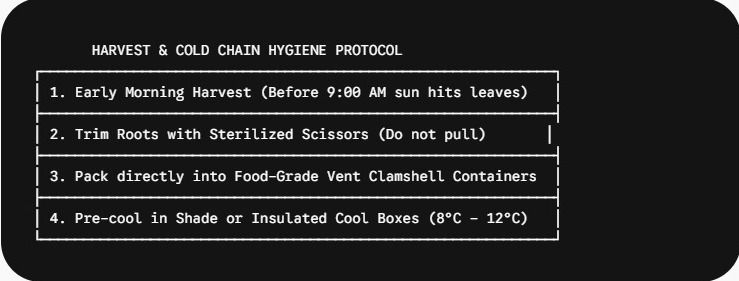
- Harvest Time: Pick leafy greens and herbs early in the morning (between 6:00 AM and 8:30 AM) when water turgor pressure in leaves is highest.
- Post-Harvest Trim: Leave a short clean stem or net cup attached if selling "living greens" to extend shelf life in retail displays.
- Packaging: Use transparent, food-grade PET clamshell containers or vented micro-perforated bags to protect delicate leaves from bruising during transport along bumpy roads.
3. High-Value Market Channels in Kenya
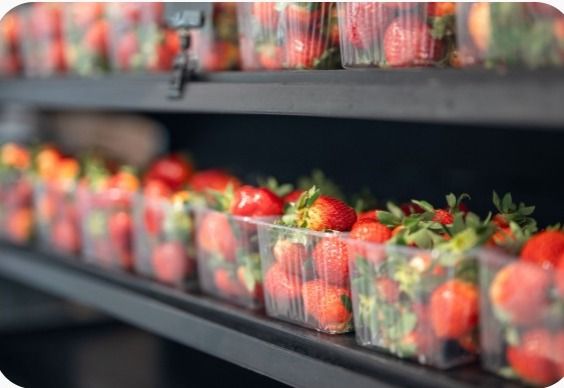
Do not rely solely on open-air wholesale markets (marikiti) where produce is sold in bulk at commodity prices. Hydroponic produce commands higher margins when targeted at buyers who value cleanliness, visual appeal, and consistency. Premium packaging protects delicate strawberries for high-value retail.
Market Channel Comparison Matrix
| Market Channel | Target Products | Price Realized | Advantages | Key Requirement / Barrier |
|---|---|---|---|---|
| High-End Supermarkets (e.g., Carrefour, Naivas, Chandarana) | Packaged Salad Mix, Strawberries, Colored Peppers | High (KES 80 – 150 per 200g pack) | Steady weekly volume orders, strong brand exposure. | Requires barcode, KEBS standard certification, formal invoicing, 30-day payment terms. |
| Boutique Hotels & Restaurants (Nairobi, Diani, Naivasha, Mombasa) | Italian Basil, Mint, Butterhead Lettuce, Cherry Tomatoes | Very High (KES 400 – 800 / kg) | Higher profit margins, cash on delivery or 14-day terms. | Demand strict quality consistency, zero insect damage, punctual morning delivery. |
| Direct-to-Consumer (Estate Subscriptions) | Weekly Vegetable Baskets (Lettuce, Spinach, Herbs, Strawberries) | High (KES 1,000 – 2,500 / basket) | Immediate cash flow, direct customer relationship. | High logistics effort; requires door-to-door delivery coordination (WhatsApp groups/social media). |
| Greengrocers & Organic Shops (Kilimani, Karen, Lavington, Runda) | Hydroponic Greens, Berries, Cucumbers | Moderate to High (KES 60 – 100 / unit) | Reliable weekly turnover, accessible to small growers. | Requires clean presentation, consistent supply schedules. |
4. How to Brand and Position Your Hydroponic Produce
To convince Kenyan consumers to choose your product over cheaper field crops, your branding must emphasize your primary competitive advantages:
- Highlight "Pesticide-Free" and "Washed & Ready to Eat": Busy urban professionals in Nairobi, Mombasa, and Kisumu will pay a premium for pre-washed, chemical-free greens that save meal preparation time.
- Sell "Living Greens" with Roots Intact: Leaving the root ball attached inside a small plastic sleeve allows lettuce or herbs to stay fresh on the kitchen counter for up to 10 days, eliminating food waste.
- Clear Labelling: Create a clean brand label detailing your farm location (e.g., "Freshly Harvested in Limuru"), harvest date, zero-pesticide guarantee, and storage instructions.
5. Sales Strategy & Securing Buyer Contracts
Before planting your first seedling, build your market network following this 4-step sales strategy:
1. Audit Local Buyer Demand within a 30km Radius
Identify local restaurants, estate buyers, and green grocers
Visit targeted high-end restaurants, boutique hotels, and estate grocers in your area. Ask head chefs and fresh produce managers which items they struggle to source with consistent quality year-round (e.g., sweet basil during rainy seasons, crisp butterhead lettuce).
2. Deliver Free Sample Packs to Decision Makers
Let the visual quality of your crop speak for itself
Prepare 5 to 10 pristine sample packs containing packaged hydroponic greens or strawberries. Hand-deliver them directly to restaurant head chefs or supermarket fresh procurement managers alongside your contact card and price list.
3. Establish Written Supply Schedules
Stagger nursery plantings to match buyer commitments
Negotiate weekly delivery volumes and fixed pricing (e.g., 50 heads of lettuce every Tuesday and Friday at KES 70 per head). Stagger your seedling nursery seeding dates so that harvests mature predictably week after week.
4. Maintain Strict Cold-Chain Punctuality
Build trust through reliability
Deliver produce early in the morning using insulated cool boxes. A single missed delivery or heat-damaged shipment can cost you a high-value commercial contract.