Managing a Co-Working Space in Kenya: House Rules, Security & Community Guidelines
1. Creating the Balance: Freedom vs. Discipline
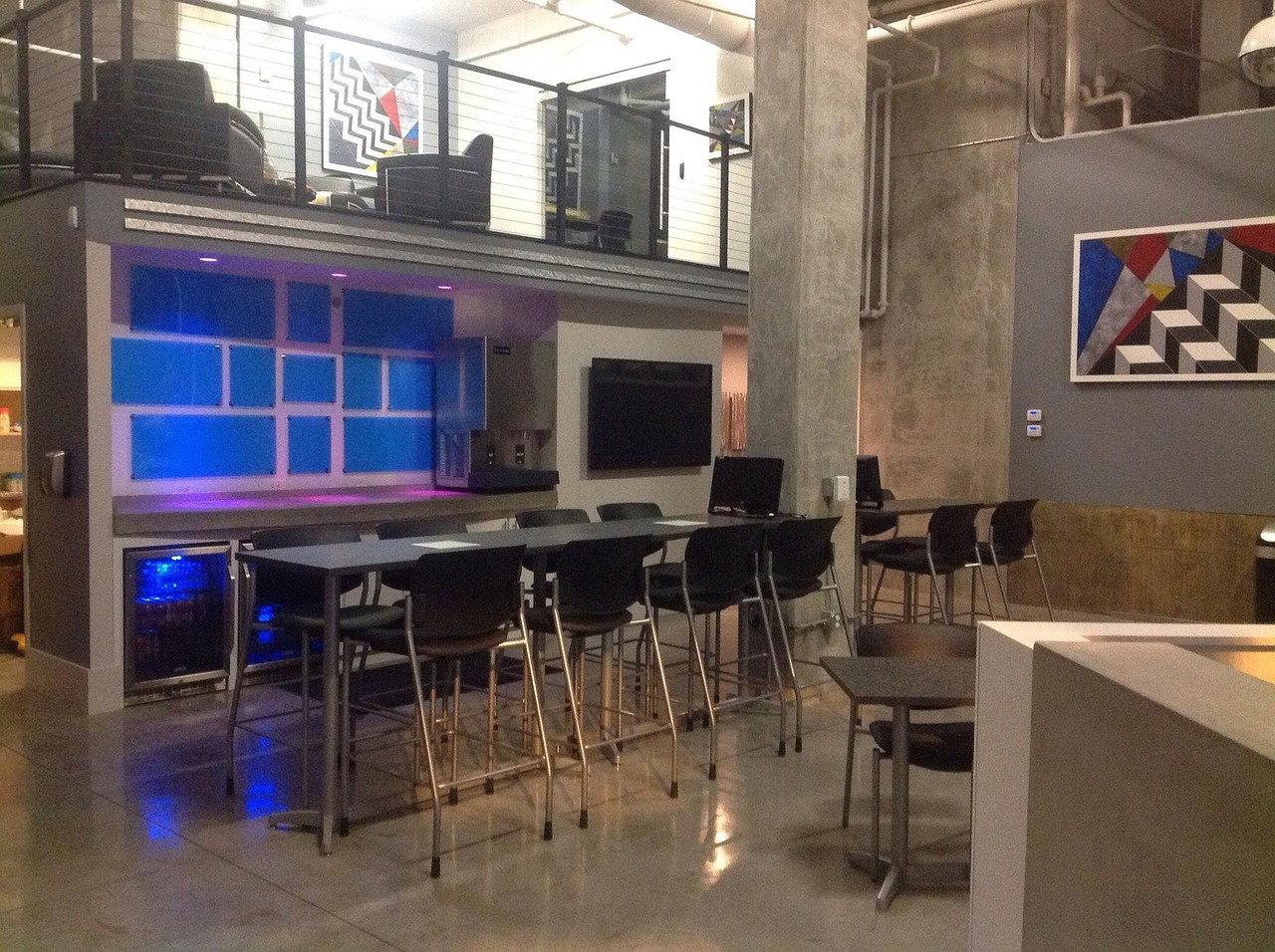
The success of a shared office space relies on its atmosphere. If the rules are too strict, members will feel micromanaged and move elsewhere; if there are no rules, the space devolves into a noisy, chaotic mess where no actual work gets done.
In a peri-urban Kenyan setting, where your members will range from quiet software programmers to loud sales consultants, you must establish clear operational boundaries on day one.
2. What to Allow vs. What to Restrict (The Rulebook)
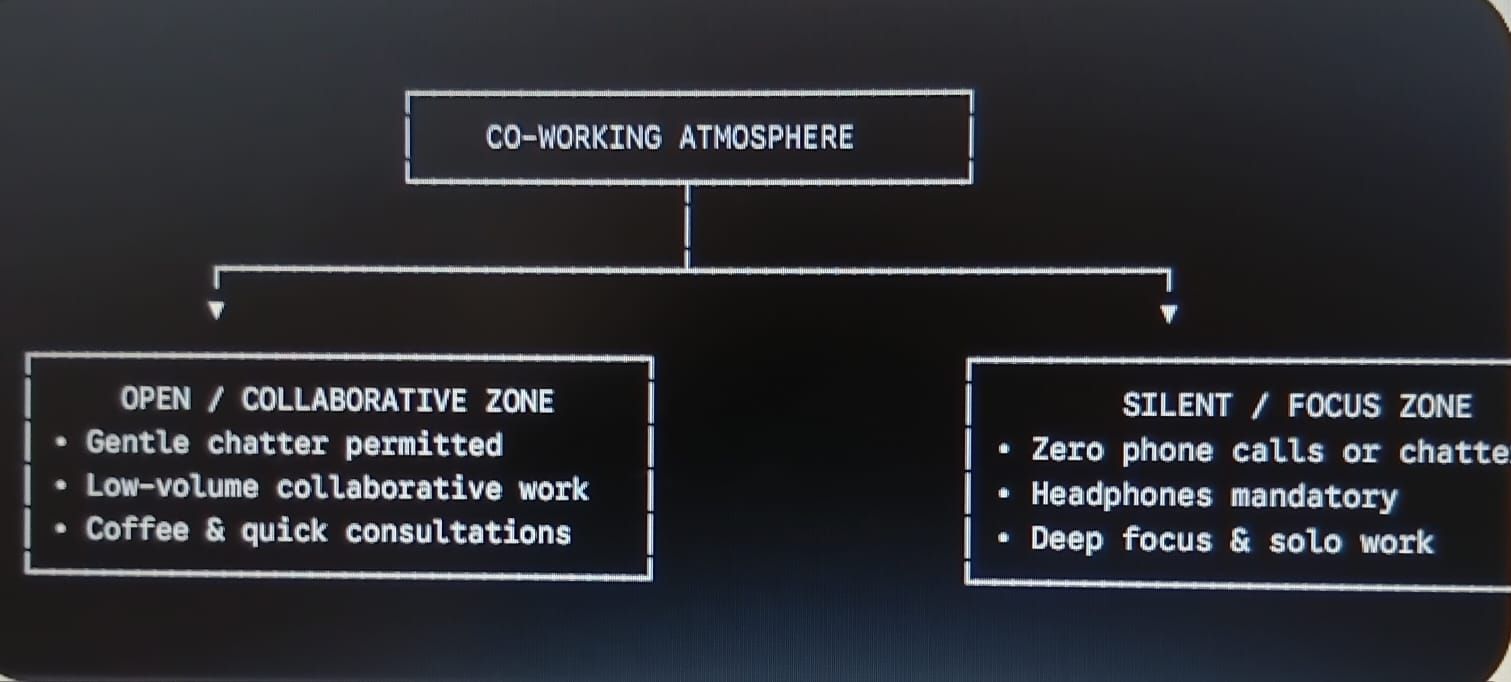
Document these guidelines clearly in your onboarding agreement and post a simplified version on a visible wall or noticeboard inside the space.
Permitted & Encouraged Activities
- Headphones-On Work: Listening to music, audio, or podcasts using earphones or headphones.
- Informal Networking: Chatting briefly with fellow members in designated lounge or coffee areas.
- Bringing Personal Devices: Plugs, extra monitors, laptop stands, ergonomic mousepads, and personal stationery.
- Outside Snacks & Non-Smelly Food: Eating light snacks, dry biscuits, fruits, and beverages at your assigned working desk.
- Short Client Meetings (in Common Areas): Brief 5-minute introductions near reception, provided they don't disturb adjacent workers.
Strictly Restricted or Forbidden Activities
- Loud Phone or Video Calls in Open Desking Areas: Members must step into a phone booth, meeting room, or balcony/outside hallway for voice and video calls.
- Using Speakerphone: Any audio output without headphones is strictly prohibited across all open zones.
- Strong-Smelling Cooked Foods: Eating fish, heavily spiced stews, or boiled eggs at hot-desks. These must be consumed strictly in the kitchenette or outdoor breakout area.
- Unannounced Non-Paying Guests: Members cannot bring guests or colleagues to sit and work alongside them in hot-desking areas without buying an additional day pass.
- Squatting / Desk Hoarding: Leaving personal belongings overnight on a flexible Hot Desk (unreserved desk). Unreserved spots must be cleared at the end of each day.
- Sub-letting / Pass Sharing: Giving a monthly access card or biometric registration to a non-member friend.
3. Physical Access Control & Operations Security
Securing your space, protecting members' expensive laptops, and managing who enters the facility requires simple, reliable systems.
Access Control Systems
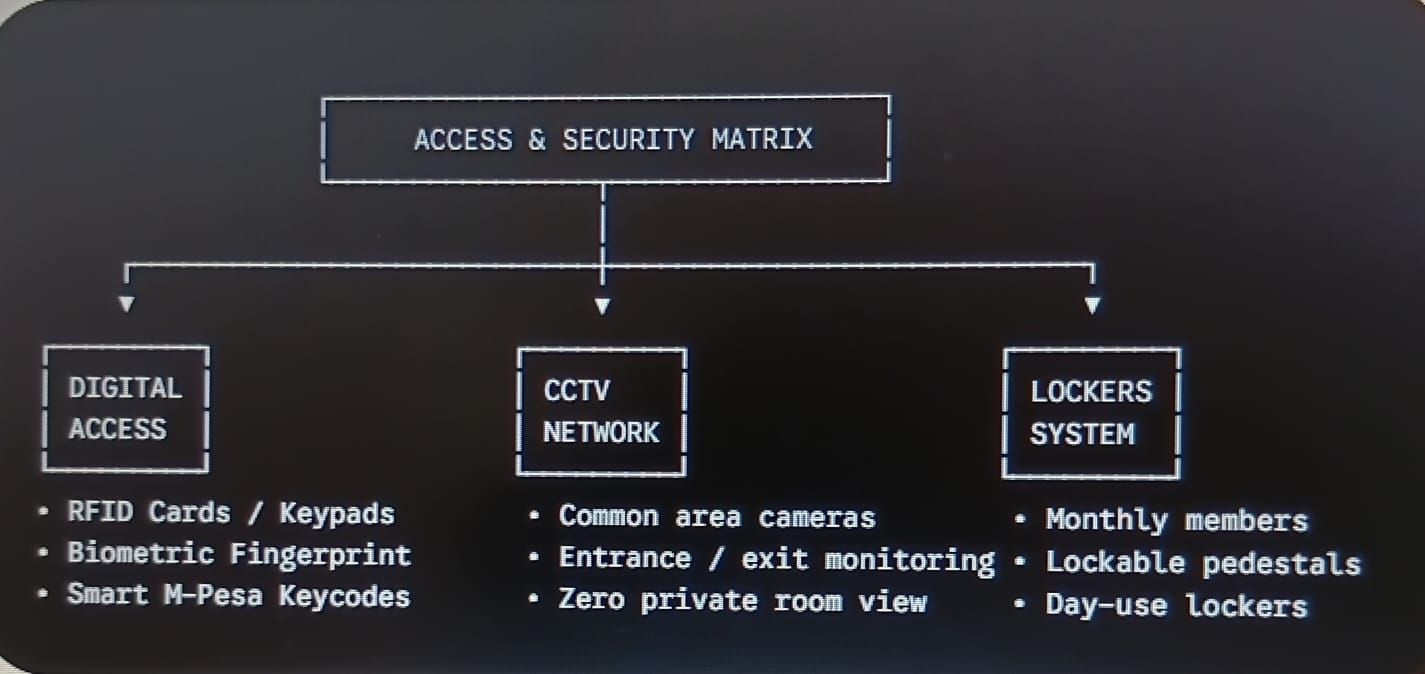
- Digital Keypads & RFID Cards: Install an electronic magnetic lock (Maglock) on the main door. Members receive an RFID keyfob or a unique 4-digit PIN code upon payment.
- Biometric Fingerprint/Face Scanners: Ideal for spaces with monthly members. It prevents members from sharing access codes with non-paying outsiders.
- M-Pesa Integrated Gateways: Advanced operators use smart door locks linked to automated M-Pesa payment gateways. Once a daily user pays KES 500 via Till/Paybill, the system texts them an access PIN valid for 12 hours.
Security & Theft Prevention
- CCTV Coverage: Position HD cameras covering the entrance, reception, main open hallways, and beverage area. Never install cameras facing keyboard angles directly or inside restrooms/private call pods.
- Lockers & Pedestals: Offer lockable under-desk drawers or a wall of metal storage lockers. Charge a small monthly add-on fee (e.g., KES 1,000/month) for dedicated locker access.
- Visitor Logging: Keep a physical or digital visitor register at the front desk for all guest drop-ins.
4. Community Management & Daily Operations
A great manager turns a plain room full of desks into a thriving local business community.
The Role of the "Community Host"
Instead of hiring a traditional receptionist, employ a energetic, tech-savvy Community Host. Their duties include:
- Welcoming drop-in clients and onboarding new monthly members.
- Verifying M-Pesa payments and issuing access receipts.
- Managing the beverage station (keeping coffee, tea, and water stocked).
- Monitoring noise levels gently and enforcing house rules politely.
- Facilitating introductions between members who might collaborate (e.g., introducing a graphic designer to a website developer).
Community Building on a Budget
- The Space WhatsApp / Slack Group: Create an opt-in WhatsApp Group or Channel where members can network, share job opportunities, ask for service recommendations, and receive space announcements.
- Friday "Coffee & Pitch" Hours: Host a 30-minute informal coffee session every Friday afternoon where 1 or 2 members share what they are working on.
- Member Directory Board: Put up a whiteboard or noticeboard near the entrance where members can pin their business cards or write down services they offer.
Next Up in the Series
Now that you have your operational policies, security setup, and community strategy in place, the final critical step is making sure your space generates sustainable profits.
In Part 4, we dive deep into Financial Models, Starting Expenses, Running Costs, Pricing Packages, and Revenue Streams, complete with a realistic financial breakdown for a peri-urban Kenyan co-working space.