Setting Up an Affordable Co-Working Space in Kenya: Layout, Partitioning & Amenities
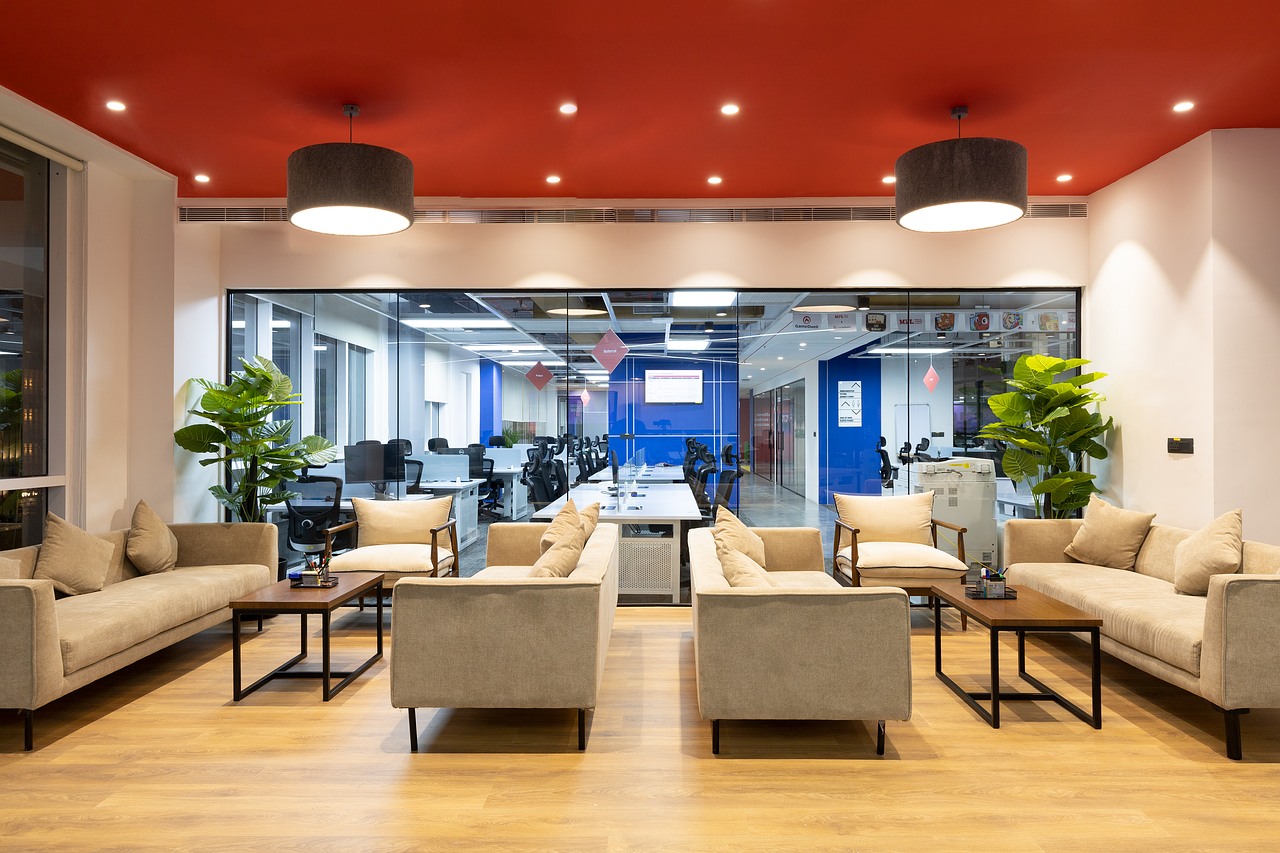
1. Location Selection & Space Sizing
Before picking up a hammer or buying a single chair, finding the right property in your target town (whether Ruiru, Kitengela, Nakuru, or Eldoret) will make or break your business.
Where to Locate
- Proximity to Transport Nodes: Choose a building within a 3–5 minute walking distance from the main matatu stage, bus terminal, or major highway drop-off.
- Floor Level:1st to 3rd floors are sweet spots. Ground floors are often priced high for retail shops, while 4th floor and above without a working elevator will turn daily drop-ins away.
- Natural Light & Ventilation: Pick spaces with large windows. Good natural light reduces electricity costs for lighting and creates an energetic environment.
- Acoustics: Avoid locations directly adjacent to loud churches, bars, auto-repair garages, or heavy industrial machinery.
Space Sizing Rule of Thumb
For a beginner, a space between 600 sq. ft. and 1,200 sq. ft. is ideal.
┌─────────────────────────────────────────────────────────────┐
│                 600 - 1,200 SQ. FT. SPACE                   │
│                                                             │
│  • Open Hot-Desking Area : 55% - 60%                        │
│  • Boardroom / Meeting   : 15% - 20%                        │
│  • Phone Booths / Quiet  : 10%                              │
│  • Reception & Beverage  : 10% - 15%                        │
└─────────────────────────────────────────────────────────────┘
Plan for roughly 25 to 35 sq. ft. per working person in the open hot-desking area. This ensures users don't feel packed like sardines while maximizing your yield per square foot.
2. Low-Cost, High-Impact Space Partitioning
Heavy brick masonry or permanent drywall will eat up your capital and ruin your lease agreement terms if you need to restore the space later. Use lightweight, modular materials that allow light to filter through while dampening noise.
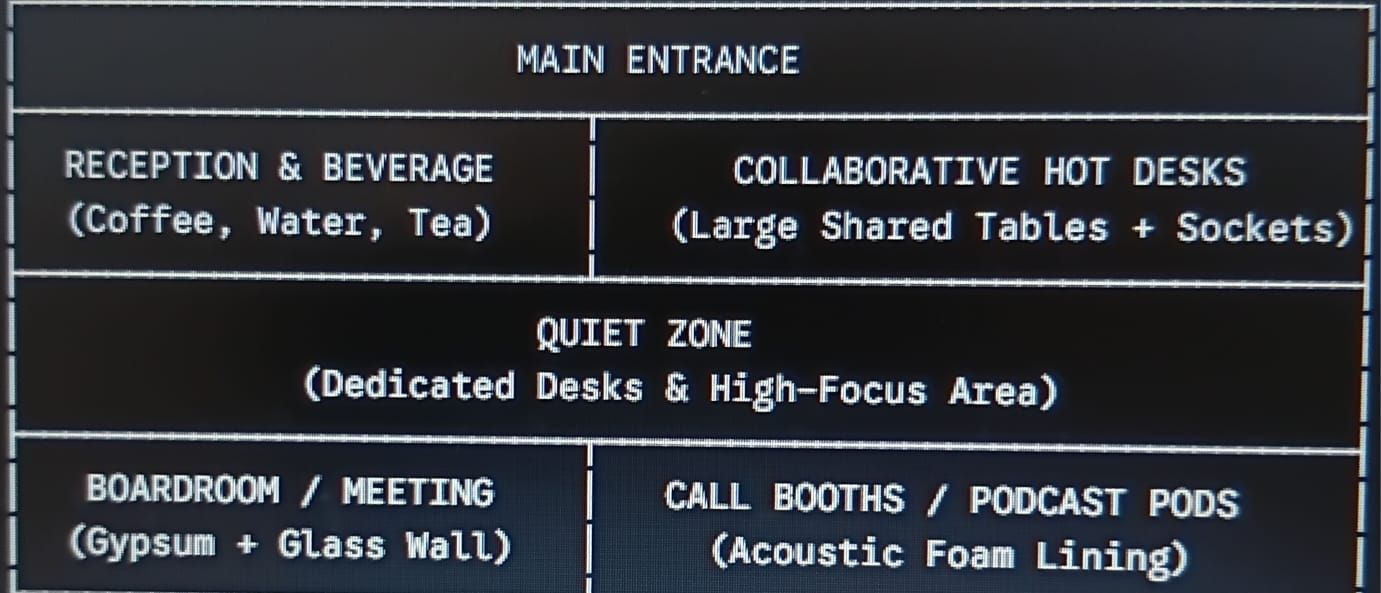
Partitioning Materials
- Gypsum Board + Glass Frames: Use gypsum for full or half-height perimeter walls and frame large glass panels facing the open room. Glass maintains an open, airy aesthetic and lets natural light reach inner rooms.
- Acoustic Wooden Slats or Bamboo Screen Dividers: Excellent for visually dividing the quiet focus zone from the collaborative coffee area without building full solid walls.
- Acoustic Soundproofing: Noise travels fast in tiled rooms. Reduce echo by using:
- Soft carpet tiles or thick vinyl flooring over raw screed.
- Wall-mounted acoustic foam panels or fabric artwork in meeting rooms.
- Heavy linen curtains along glass partitions.
3. Essential Infrastructure: Power & Internet Redundancy
In a peri-urban Kenyan setting, internet speed and power stability are non-negotiable. If your internet drops or power goes off during a client's Zoom call, they will not return.
Dual-ISP Internet with Load Balancing
Never rely on a single Internet Service Provider (ISP). Subscribe to two distinct providers using different technology delivery paths:
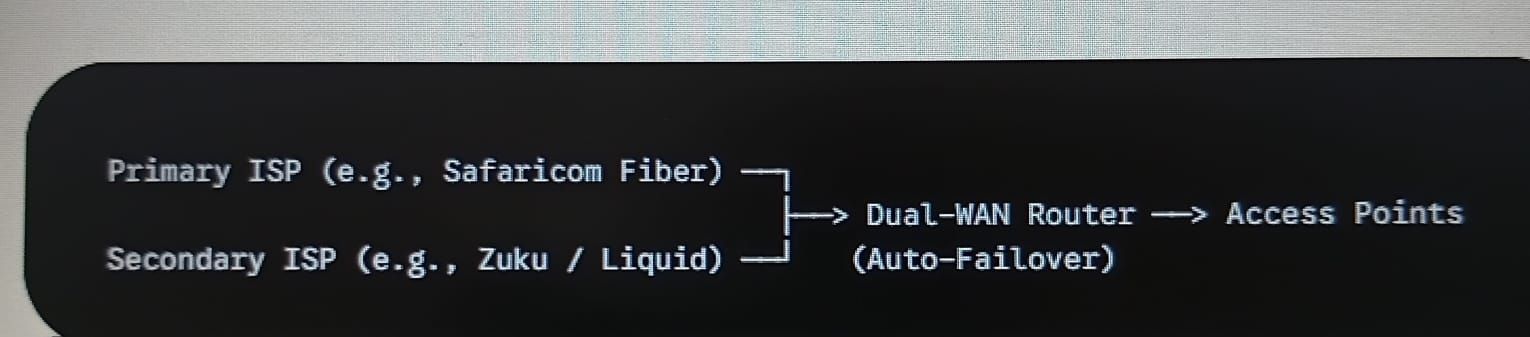
- Primary Line: High-speed fiber connection (e.g., 50 Mbps – 100 Mbps dedicated or business fiber).
- Backup Line: Secondary fiber provider or a reliable fixed 5G wireless connection.
- Dual-WAN Load-Balancing Router (e.g., TP-Link Safestream or MikroTik): Automatically switches traffic to the backup line in milliseconds if the primary line cuts out.
Uninterruptible Power Supply (UPS) & Backup
A noisy petrol generator is expensive to run and annoys coworkers. A pure sine wave inverter system with Lithium-ion batteries is silent, clean, and requires zero daily maintenance.
- Battery System: A 3kVA to 5kVA Inverter paired with a 4.8kWh Lithium (LiFePO4) battery bank can power 25 laptops, Wi-Fi routers, lighting, and phone chargers for 6 to 8 hours during a KPLC outage.
- Dedicated Power Outlets: Color-code or label your wall sockets:
- White Sockets: Utility outlets connected to grid power (for kettles, printers, vacuum cleaners).
- Red/Green Sockets: Inverter-backed outlets (strictly for laptops, monitors, and phone charging).
4. Furniture & Layout Sourcing Strategies
Keep furniture costs manageable without sacrificing durability or ergonomic comfort.
Working Desks & Tables
- Custom Metal Frame + Timber/MDF Tops: Instead of buying expensive individual office desks, hire a local welder and carpenter to build long communal workbench tables (e.g., 2.4m x 1.2m).
- Cable Grommets & Power Strips: Ensure every desk module has pop-up power modules, double USB ports, and under-desk cable trays so cables don't dangle on the floor.
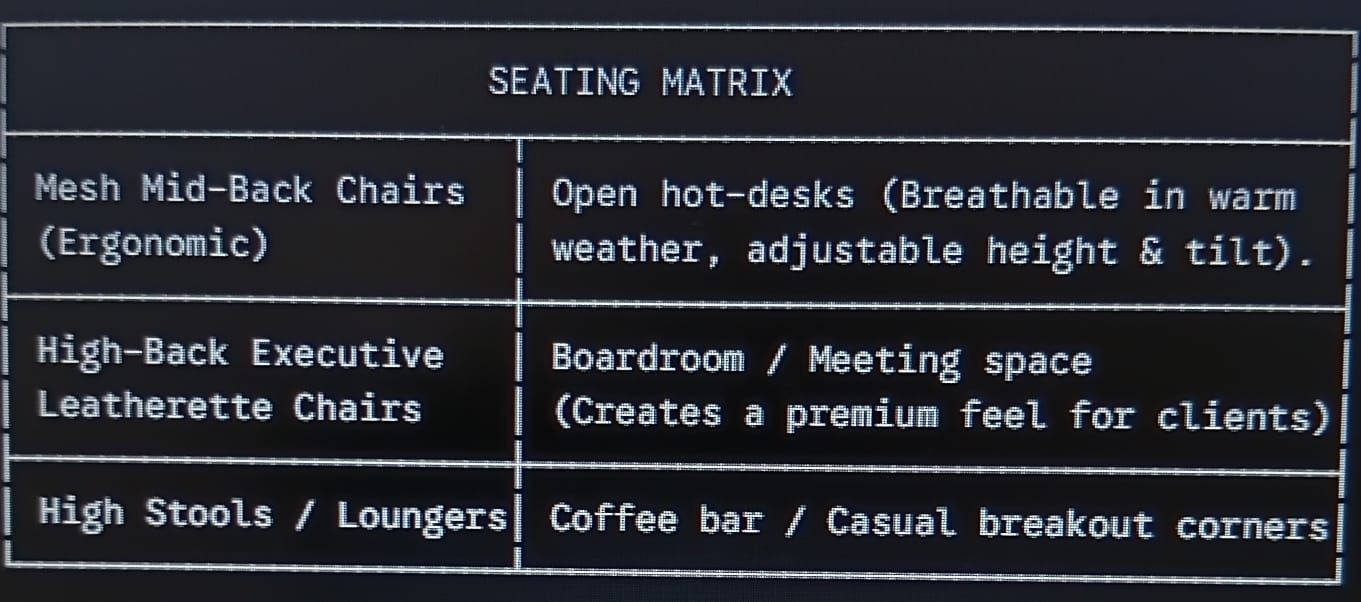
Seating (Where Not to Cut Corners)
Do not buy cheap plastic chairs or soft dining chairs for full-day work.
- Sourcing Tip: Look for local office furniture importers or ex-bank clearance sales in Nairobi (Industrial Area or Parklands) to acquire high-grade ergonomic chairs at wholesale or refurbished prices.
5. Kitchenette & Shared Amenities
Provide simple amenities that build a comfortable daily routine for your members:
- Beverage Counter: Electric kettle, water dispenser (hot/cold), sugar pots, tea bags, instant coffee, and cocoa powder.
- Mug Management: Provide ceramic mugs and glasses, but enforce a clean-as-you-go policy or assign a part-time attendant.
- Multi-Function Network Printer/Scanner: A heavy-duty monochrome laser printer (e.g., HP LaserJet or Kyocera) set up on the local Wi-Fi network with print-tracking software (or pay-per-page tokens managed at reception).
Next Up in the Series
With your physical space partitioned, wired for backup power, and furnished, you must establish clear operational boundaries so the space runs smoothly.
In Part 3, we will cover House Rules, Access Control, Security, and Community Management—defining what users are allowed to do, what to strictly restrict, handling security, and keeping members happy.