The Future of QR Payments in Kenya: Soundboxes, Hardware & Market Gaps

1. Unexplored Hardware & Software Opportunities
While software platforms handle online digital payments well, physical point-of-sale environments in Kenya present unique physical and environmental constraints.
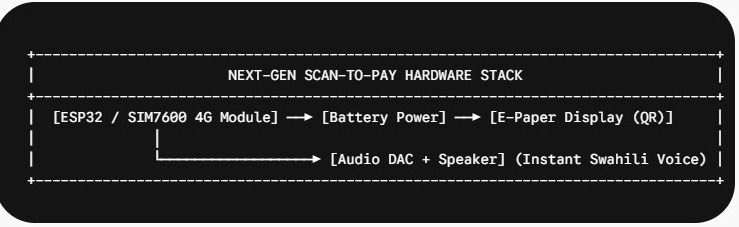
Gap 1: Audio Payment Verification ("PayTM-Style" Soundboxes)
- The Problem: In noisy environments (Matatus during rush hour, open-air markets like Gikomba or Wakulima), merchants cannot check smartphone screens. SMS alerts are frequently delayed, and customers fake payment confirmation SMS screens ("SMS Scams").
- The Innovation: A low-cost, SIM-enabled standalone IoT speaker placed at the counter or bus dashboard.
- Technical Spec:An ESP32 microcontroller with a SIM7600 4G LTE module and an audio DAC. Upon receiving a Webhook notification via MQTT or WebSockets, it plays a high-volume pre-stored audio file:
"M-Pesa imepokelewa: Shilingi Mia Tatu!"
Gap 2: Standalone Low-Power E-Paper QR Displays
- The Problem: Dynamic QR generation currently requires the merchant to own an Android smartphone or POS terminal. Micro-merchants often don't want to leave expensive phones on open counters.
- The Innovation: A battery-powered 4.2-inch E-Paper screen displaying dynamic QR codes. E-paper draws power only when changing the image, enabling a single charge to last up to 30 days.
2. Industry-Specific Deep Dives
A. Matatu Transport Automation Architecture
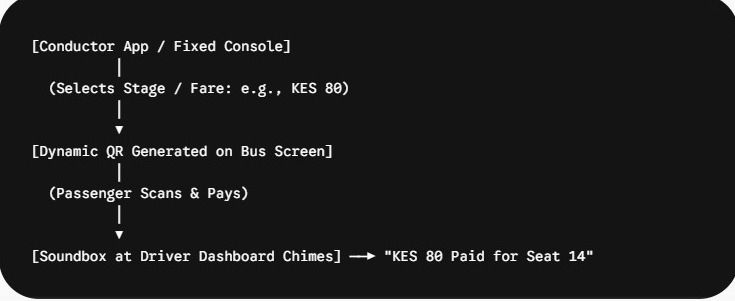
- Zone-Based Dynamic QR: The conductor taps a simple 4-button hardware console attached to the vehicle door (
[Stage 1: 50/-],[Stage 2: 70/-],[Stage 3: 100/-]). - The dynamic QR updates instantly on an overhead screen inside the bus.
- Passengers scan as they board. The driver/conductor hears instant chime verification without touching any device.
B. Automated Tax & Compliance Integration (KRA eTIMS)
Under Kenya Revenue Authority (KRA) eTIMS compliance, businesses are required to issue electronic tax invoices.
- Developer Advantage: A scan-to-pay platform can automatically convert verified M-Pesa callbacks into serialized eTIMS tax invoices in real-time using KRA’s API, eliminating manual tax filing for micro-enterprises.
3. Commercialization & Go-To-Market Strategy for Techies
To successfully distribute a Scan-to-Pay product in Kenya, technology alone is insufficient—distribution is king.
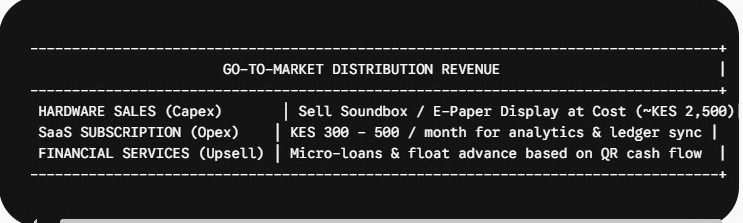
The "Trojan Horse" Strategy: Cash-Flow Underwriting
Once a fintech app routes a micro-merchant's daily transactions through Scan-to-Pay, the platform gains access to verifiable real-time cash flow data. This data enables you to:
- Offer short-term inventory financing (e.g., restocking a shop before morning).
- Provide working capital loans to matatu owners based on verifiable daily passenger yields.