Off-Grid Solar, Borehole & Biogas Setup for Kenyan Farms: Sizing & Costs
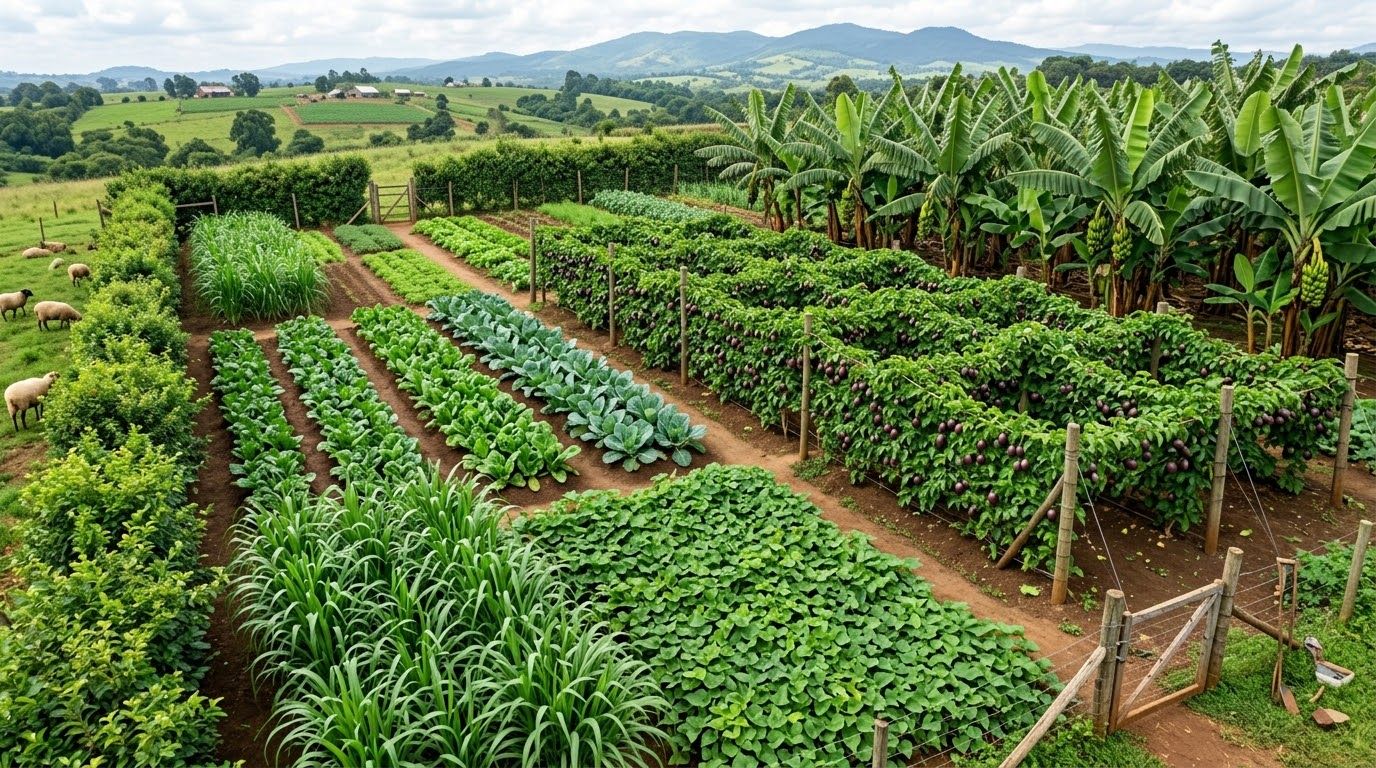
Off-Grid Infrastructure: Solar Power, Borehole Pumping & Biogas Engineering for Rural Kenya
In Part 1 and Part 2 of this series, we designed the master spatial layout and mapped out the high-yield agricultural engine for a 2-acre integrated homestead.
However, rural farms often face two major bottlenecks: unreliable power grid connections and exorbitant monthly water and energy bills.
To build a truly self-sustaining retirement farm that generates net income rather than recurring overheads, you need robust off-grid utilities.
This guide provides exact technical specifications, sizing formulas, and installation steps for a 5kW hybrid solar micro-grid, a solar-powered borehole water system, and a 12m³ continuous-flow bio-digester.
1. The 5kW Off-Grid Solar Micro-Grid System
A standard grid connection in rural Kenya (KPLC) involves high initial transformer connection fees, volatile token rates, and frequent blackouts. A dedicated off-grid solar system gives you 100% power independence.
Daily Energy Load Estimation
| Equipment / Appliance | Quantity | Wattage (W) | Usage Hours/Day | Daily Consumption (Wh) |
| LED Lighting (House + Compound) | 16 | 10W | 6 hrs | 960 Wh |
| Energy Star Refrigerator | 1 | 150W | 24 hrs (duty cycle ~10h) | 1,500 Wh |
| Smart TV & Home Audio | 1 | 100W | 5 hrs | 500 Wh |
| WiFi Router, Phones, Laptops | - | 60W | 12 hrs | 720 Wh |
| Chaff Cutter / Feed Chipper | 1 | 1,500W | 1 hr | 1,500 Wh |
| Milking Machine / Small Tools | 1 | 750W | 1 hr | 750 Wh |
| Total Estimated Daily Load | 6,430 Wh (~6.4 kWh/day) |
System Sizing & Equipment Specifications
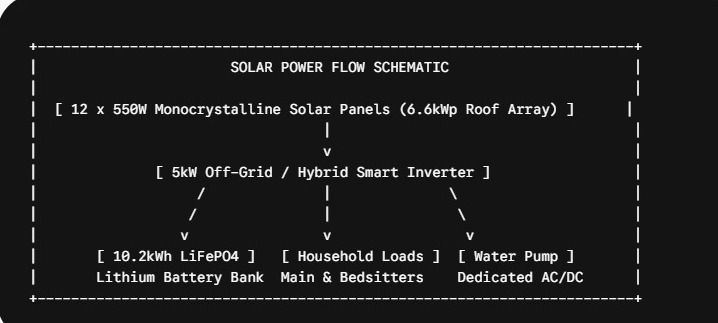
- Solar PV Array: 12 x 550W Tier-1 Monocrystalline solar panels (6.6kWp total capacity). Monocrystalline panels perform significantly better in high-ambient-temperature regions.
- Inverter: 5kW 48V Pure Sine Wave Hybrid Inverter with built-in 80A MPPT Charge Controller.
- Battery Bank: 10.2kWh Lithium Iron Phosphate (LiFePO4) battery bank (48V 200Ah). LiFePO4 technology provides over 4,000–6,000 discharge cycles (10–15 years lifespan) compared to legacy gel or lead-acid batteries.
2. Solar-Powered Water System & Borehole Sizing
Water is the lifeblood of your crops and livestock. Relying on municipal supply or seasonal rainfall is risky.
Water Sizing Requirements
- 5 Dairy Cows & 20 Sheep: ~500 Liters/day
- Domestic Household Use (Main House + Staff): ~400 Liters/day
- Drip Irrigation (0.5 Acres Vegetables + 0.75 Acres Fodder): ~5,000 – 8,000 Liters/day (during dry seasons)
- Total Daily Water Target: 7,000 – 10,000 Liters / day
Technical Specifications for the Water System
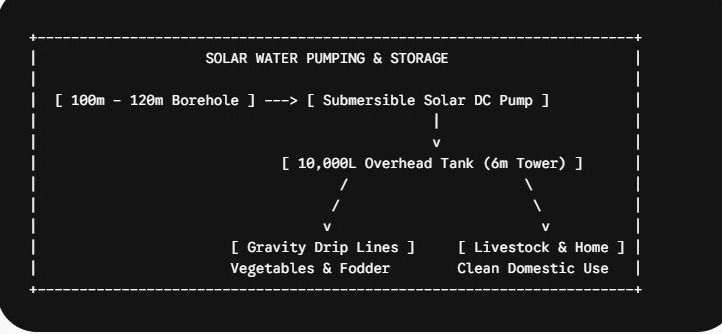
- Borehole Depth: Typically 100m – 140m in moderate water-table zones across Kenya (hydrogeological survey required prior to drilling).
- Submersible Solar Pump: 1.5HP – 2.0HP DC brushless solar submersible pump capable of delivering 2,500 – 3,500L/hr at a total dynamic head (TDH) of 120m.
- Dedicated Solar Array: 4 x 400W solar panels connected directly to a DC pump controller, running automatically during peak sunlight hours (9:00AM – 4:00PM).
- Storage & Gravity Distribution:
- Overhead Tank: 10,000-liter food-grade plastic tank elevated on a 6-meter steel tower.
- Underground Rain Tank: 30,000-liter masonry tank collecting roof runoff to supplement irrigation during rainy seasons.
3. The 12m³ Continuous-Flow Bio-Digester System
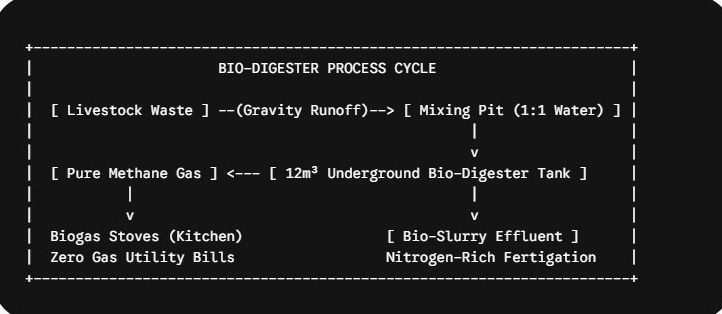
Manure from 5 dairy cows and 20 sheep generates a continuous supply of methane gas for cooking, while converting animal waste into high-value organic liquid fertilizer (bio-slurry).
System Sizing & Feeding Balance
A 12 m3 fixed-dome masonry or prefabricated tubular bio-digester requires approximately 100–120 kg of fresh manure daily, mixed in a 1:1 ratio with water or milking parlor washdown.
- Daily Output: Produces 3.5 – 5.0 m3 of clean biogas daily, equivalent to about 2–3 hours of continuous multi-burner stove usage. This easily meets the daily cooking needs of the main house and worker bedsitters.
- Bio-Slurry Production: Yields ~200 Liters of concentrated liquid bio-slurry per day. Diluted with irrigation water, this eliminates the need for synthetic nitrogen fertilizers (like CAN or Urea) on your vegetable plots and fodder fields.
4. Itemized Equipment Budget for Off-Grid Utilities
| Infrastructure Component | Key Equipment Included | Estimated Cost Range (KES) |
| 5kW Solar Micro-Grid | 12x 550W panels, 5kW Hybrid Inverter, 10.2kWh LiFePO4 battery, wiring, surge protection & mounting racks. | KES 450,000 – 650,000 |
| Borehole Drilling & Survey | Hydrogeological survey, NEMA permits, $100\text{m}–120\text{m}$ rotary drilling, casing, and gravel packing. | KES 650,000 – 950,000 |
| Solar Pump & Water Storage | 1.5HP DC Solar Pump, dedicated 1.6kW PV panels, 6m steel tower, $10,000\text{L}$ overhead tank, plumbing fittings. | KES 350,000 – 500,000 |
| 12m³ Bio-Digester System | Underground masonry/prefab digester tank, piping to main house & staff units, desulfurizer, biogas stoves. | KES 130,000 – 180,000 |
| Total Utility Investment | Complete energy, water, and gas independence. | KES 1,580,000 – 2,280,000 |
What’s Next in This Series?
In Part 4, we bring everything together into a comprehensive financial model: an itemized master budget for all 2 acres, projected annual cash flow from milk, crops, and livestock, and the exact return on investment (ROI) timeline for your retirement venture.